
Engineered in ISO 13485 certified facilities. Ready for custom branding, algorithm integration, and SDK deployment.

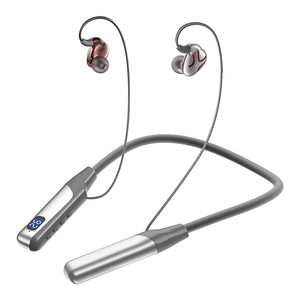
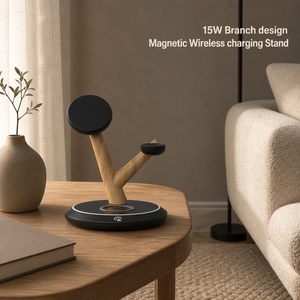
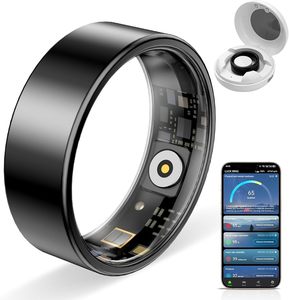
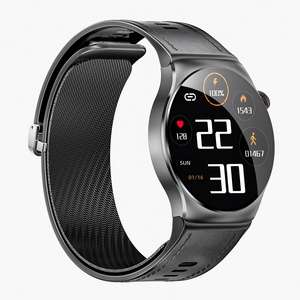
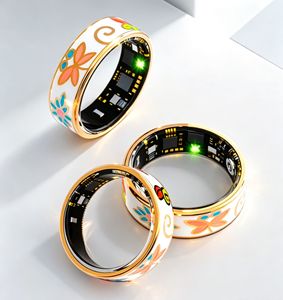
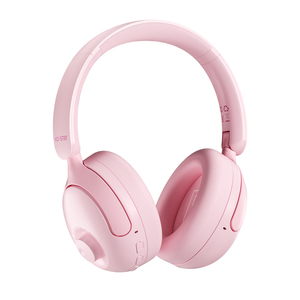
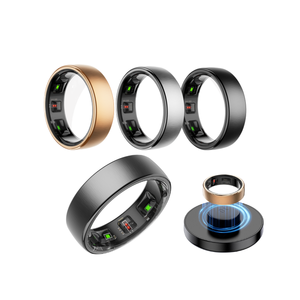
The global wearable health monitoring industry is undergoing a structural paradigm shift. Where early-generation smartwatches relied exclusively on photoplethysmography (PPG) optical sensors for estimated pulse tracking, modern healthcare ecosystems demand clinical-grade Electrocardiogram (ECG) waveform acquisition. This technical evolution allows wearable devices to detect complex cardiac anomalies—including Atrial Fibrillation (AFib), Premature Ventricular Contractions (PVCs), and Sinus Tachycardia—directly from a user's wrist.
China has established itself as the world's primary manufacturing hub for advanced micro-electronics and medical-grade smart wearables. Located predominantly across Shenzhen, Dongguan, and Huizhou in Guangdong Province, top China ECG smartwatch factories provide international brands, hospital networks, telecom operators, and consumer electronics distributors with unparalleled manufacturing scale, sophisticated supply chain vertical integration, and deep firmware customization capabilities.
This industry whitepaper serves as an authoritative procurement guide for global B2B buyers seeking top-tier China ECG heart smartwatch factories and suppliers. It analyzes sensor hardware architectures, signal processing algorithms, regulatory certification pathways (FDA 510(k), CE MDR Class IIa, NMPA), factory audit benchmarks, and strategic purchasing trends through 2030.
Top factories integrate tier-one IC solutions such as Texas Instruments (TI AFE4404), Maxim Integrated (MAX30001), or Analog Devices (AD8232). These AFEs deliver high Common-Mode Rejection Ratios (CMRR > 100dB) to isolate microvolt-level cardiac signals from electrical noise.
Eliminating the need for conductive gels, leading suppliers utilize PVD (Physical Vapor Deposition) Titanium Nitride (TiN) coatings, 316L Stainless Steel rings, or conductive nano-ceramic rear cases to ensure low contact impedance and zero skin irritation over extended wear.
Enterprise suppliers embed Convolutional Neural Network (CNN) algorithms within cloud backends and edge MCUs. Trained on millions of annotated Lead-I ECG strip datasets, these algorithms detect up to 16 distinct arrhythmia types with verified medical accuracy.
A primary challenge for procurement officers evaluating smartwatch suppliers is distinguishing between standard PPG optical heart rate measurement and authentic bio-potential ECG measurement. Understanding this distinction is vital for brand positioning and medical compliance.
Premium OEM smartwatches combine real-time ECG electrode signals with PPG optical sensors to calculate Pulse Transit Time (PTT). PTT measures the microsecond delay between the heart's electrical ventricular depolarization (ECG R-wave peak) and the arrival of the blood pressure wave at the wrist (PPG systolic peak). This enables continuous, cuffless blood pressure estimation without mechanical inflation bladders.
To capture accurate Lead-I ECG signals, the user completes a closed circuit by placing a finger from the opposite hand onto a top-frame electrode, while the bottom electrode contacts the skin of the wrist. The differential voltage (typically ranging between 0.5mV and 5mV) is routed through high-pass filters to strip away baseline wander caused by respiration and body motion.
| Evaluation Parameter | Consumer-Grade Optical PPG | Medical-Grade Single-Lead ECG | Hybrid PPG + ECG (Tier-1 China OEM) |
|---|---|---|---|
| Primary Measurement | Volumetric changes in microvascular blood flow | Bio-electrical excitation of cardiac muscle tissues | Synchronized electrical + optical wave analysis |
| Diagnostic Capabilities | General resting/active heart rate, basic HRV | AFib, PVC, PAC, ST-segment deviation, sinus rhythm | Arrhythmia detection + continuous cuffless BP trends |
| Signal Integrity & Noise | Susceptible to motion artifacts & skin tone opacity | High SNR with hardware differential amplification | Cross-validated multi-sensor noise cancellation |
| Regulatory Approval Target | General Wellness (FDA Class I / Exempt) | Medical Device (FDA 510(k) Class II / CE MDR) | Dual Certification (Wellness + Clinical Telehealth) |
| Target Retail Price Point | $15 - $45 USD | $60 - $150 USD | $90 - $250+ USD |
When selecting a manufacturing partner for ECG smartwatches in China, buyers must evaluate potential suppliers across rigorous quality assurance frameworks. Medical-grade wearables require significantly stricter manufacturing controls than standard consumer electronics.
Unlike standard ISO 9001 quality audits, ISO 13485 specifies stringent quality management requirements for medical device design, risk management (ISO 14971), cleanroom assembly, and component traceability. Top-tier factories maintain dedicated Class 100,000 ESD-controlled cleanrooms for optical lens bonding and bio-electrode assembly.
Because smartwatches are worn continuously against the skin, electrode materials and case plastics must undergo rigorous bio-compatibility verification according to ISO 10993 standards. Procurement teams must request documented test reports for:
For B2B buyers integrating smartwatches into telehealth platforms, insurance portals, or enterprise remote patient monitoring (RPM) software, factory software capabilities are just as critical as hardware assembly. Tier-one suppliers offer enterprise-grade iOS and Android SDKs featuring API hooks for raw 512Hz ECG sampling rate data, Bluetooth LE GATT service protocols, and encrypted MQTT data streaming.
A proven methodology for vetting OEM/ODM smart wearable manufacturers in China.
Verify whether the factory develops proprietary PCB layouts and owns algorithm source codes, or merely re-assembles off-the-shelf public domain solution boards (PCBA).
Ensure the factory possesses internal testing labs for IP68 dust/water immersion, thermal shock (-20°C to 60°C), salt spray corrosion, and 10,000-cycle button actuation.
Cross-reference CE MDR certificates with EU Notified Body databases (e.g., TÜV SÜD, SGS, BSI) and confirm FDA 510(k) K-numbers directly on the FDA AccessData portal.
Define Acceptable Quality Limits (AQL Level II: 0 Major / 1.5 Minor defects) and formalize RMA/warranty terms before issuing initial production deposits.
As competition intensifies in the smart wearable market, China's forward-looking ODM factories are pioneering new hardware technologies that will shape global B2B procurement over the next five years:
With over a decade of dedicated innovation in the smart wearable and wireless acoustic sectors, our manufacturing infrastructure stands as an industry benchmark in China. Having served over 5 million satisfied users worldwide and consistently recognized among the top global smart wearable brands, we deliver end-to-end OEM and ODM services tailored to enterprise procurement needs.
From initial industrial design (ID) and mechanical tooling (MD) to custom firmware engineering, ISO 13485 quality control, and international regulatory support, our team provides turn-key solutions that reduce time-to-market and ensure maximum commercial profitability for our partners.
Essential answers for B2B buyers, distributors, and OEM brand partners sourcing ECG smartwatches from China.
Connect directly with our engineering team to request factory audits, technical specification sheets, sample units, and instant OEM price quotes.
Get a Quote