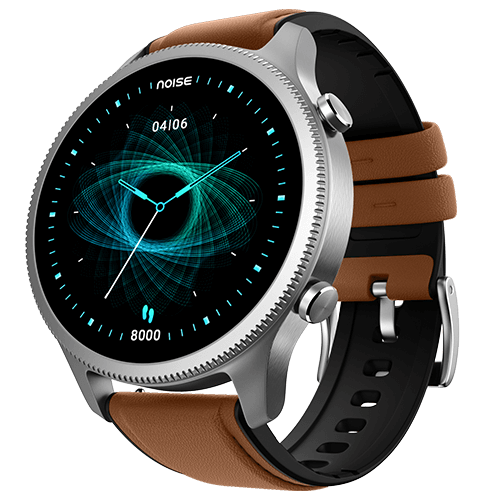
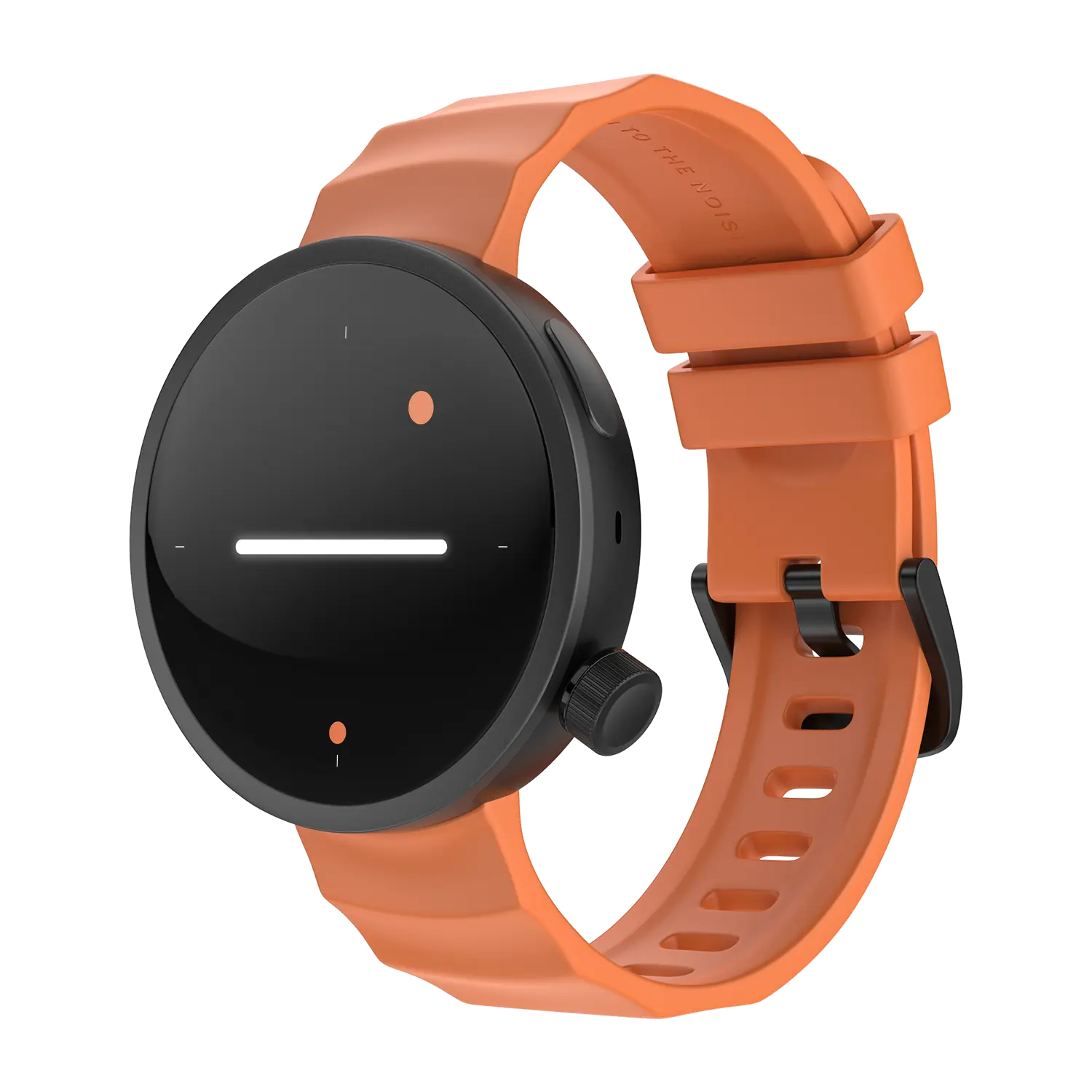
NoiseFit Halo
- 1.43" AMOLED Display
- Round Dial Build
- BT Calling
- 100+ Sports Modes
High-grade metallic finish with 500-nit AMOLED display, perfect for professional and urban fitness segments.
Explore Details →Understanding the micro-display specifications, power efficiency trade-offs, and driver integration strategies essential for global B2B procurement success.
As consumer expectations shift from traditional backlit TFT/LCD screens to vivid, low-power displays, the AMOLED Display Smartwatch has emerged as the non-negotiable benchmark in wearable technology. For global procurement officers, B2B distributors, and retail importers, evaluating AMOLED smartwatches requires going beyond surface-level aesthetic design. Sourcing the right lineup demands a rigorous evaluation of display panel physics, sub-pixel architecture, power management ICs (PMICs), and thermal-optical durability under extreme environmental conditions.
At Noise, founded in 2014 by tech visionaries Amit Khatri and Gaurav Khatri, our rapid elevation to a Top 3 Global Smartwatch Brand has been driven by continuous R&D investments in display integration. This technical guide outlines the precise architectural standards global buyers must assess to maximize retail margins, mitigate product RMA rates, and capture growing market share.
Unlike conventional Liquid Crystal Displays (LCDs) that rely on a continuous LED backlight panel consuming constant power regardless of color output, an AMOLED (Active-Matrix Organic Light-Emitting Diode) display utilizes self-emissive organic compounds. Each individual sub-pixel produces its own luminance upon electrical activation.
For outdoor visibility, look for AMOLED panels rated between 600 and 1000 Nits peak brightness. Noise engineers integrate ambient light sensors coupled with high-frequency PWM (Pulse-Width Modulation) control to dynamic balance legibility under direct sunlight while preventing localized panel heating and battery drain.
One of the primary friction points in sourcing budget wearables is display degradation or "burn-in"—the permanent discoloration of organic sub-pixels under static high-luminance loads. When selecting an AMOLED display smartwatch supplier, enterprise buyers must audit the vendor’s hardware and firmware anti-burn-in protocols.
Noise addresses this engineering challenge through a multi-layered mitigation pipeline:
Explore our market-ready AMOLED lineup engineered for high retail velocity, backed by international certifications and 1-year global warranty support.
High-grade metallic finish with 500-nit AMOLED display, perfect for professional and urban fitness segments.
Explore Details →
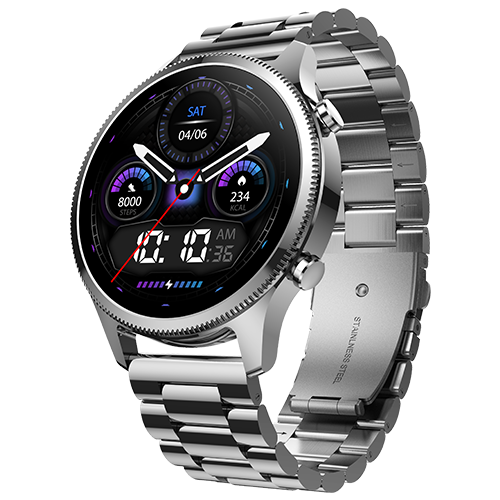
Luxury aesthetic featuring a high-density AMOLED panel, brushed alloy bezel, and advanced health suite.
Explore Details →
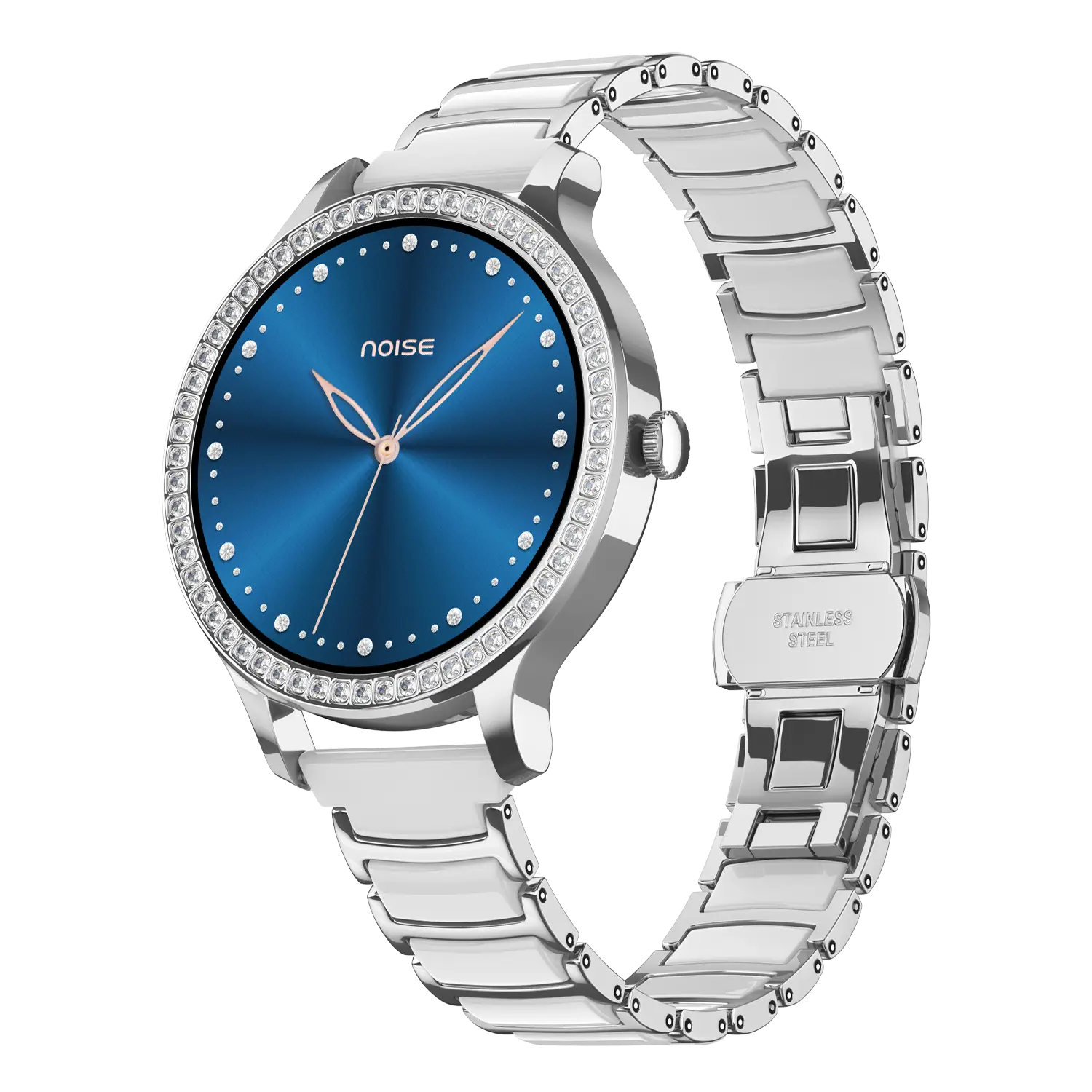
Jewelry-grade craftsmanship tailored for modern women, featuring extreme-luminance 850-nit AMOLED glass.
Explore Details →
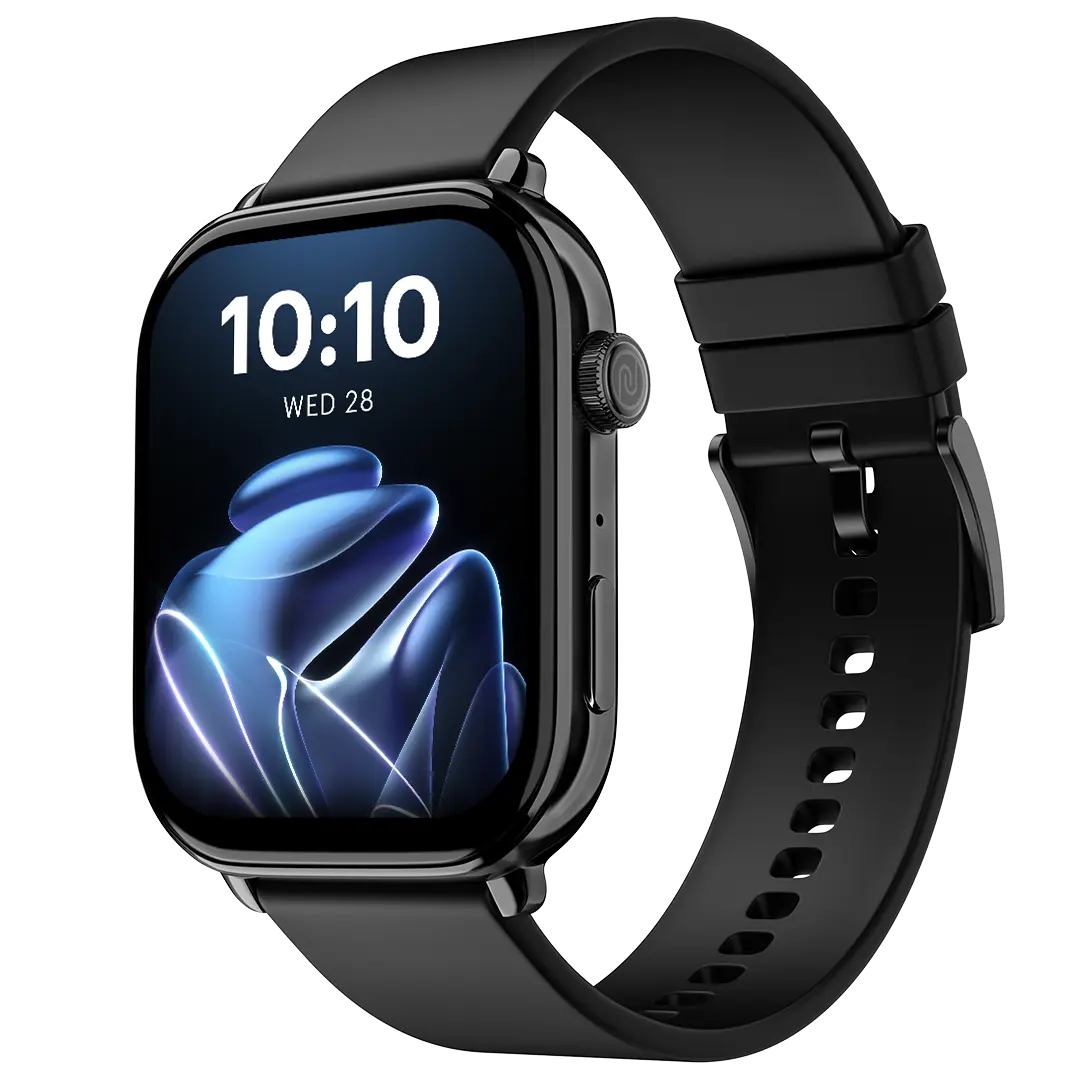
Maximized screen real estate providing high margin opportunities for volume retail and e-commerce bundling.
Explore Details →
Flagship outdoor smartwatch with sunlight-defying 1000-nit AMOLED panel and precise GNSS satellite tracking.
Explore Details →
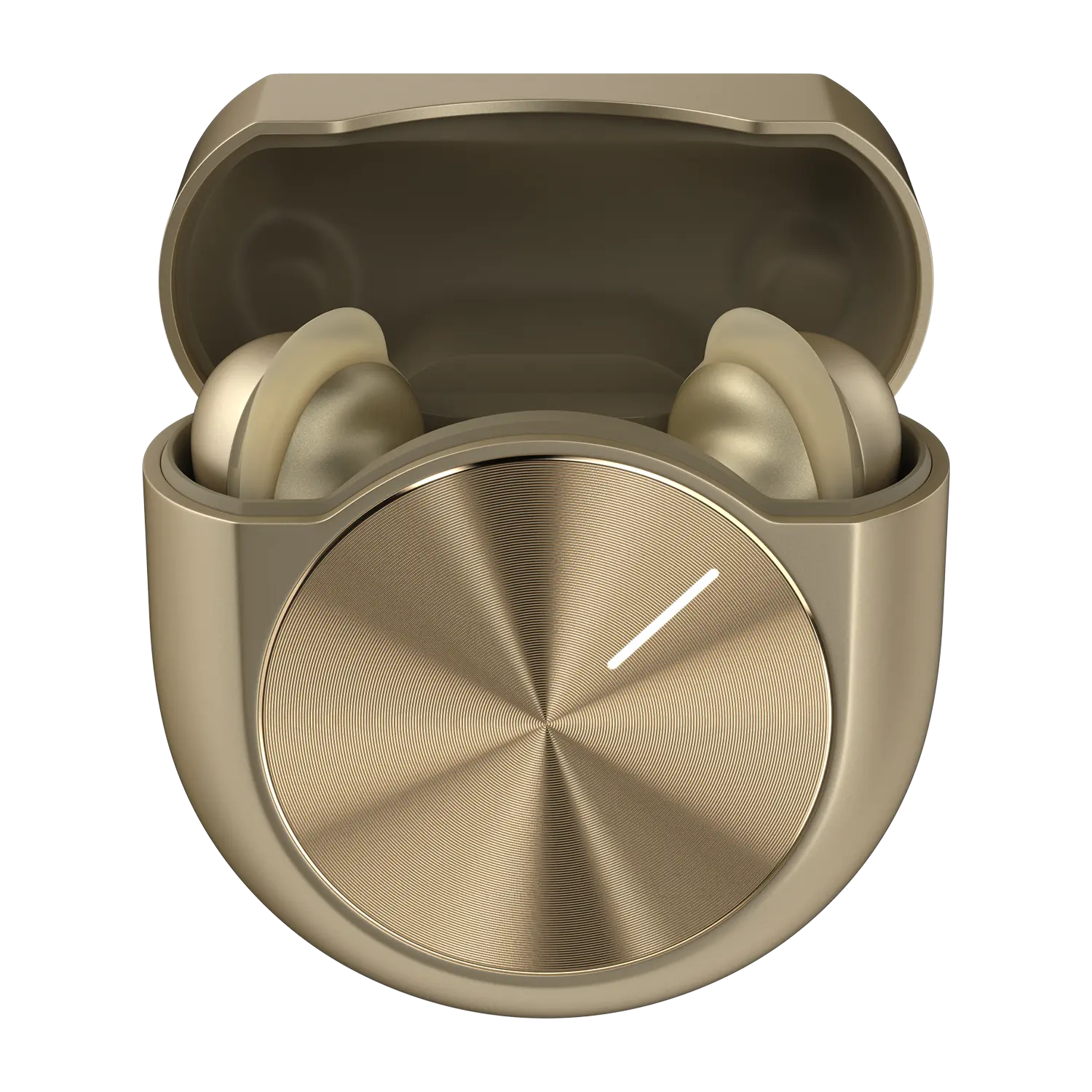
Global buyers achieve 35% higher average basket sizes by offering bundled solutions. Noise Master Series earbuds feature acoustic tuning by Bose, LHDC Hi-Res audio, and seamless connectivity within the Noise app ecosystem.
Key technological shifts and supply chain evolutions global buyers must monitor to maintain competitive market differentiation.
The global smartwatch market is undergoing rapid technology convergence. For distributors and retail procurement specialists, catalog planning requires anticipating market shifts 12 to 24 months in advance. Based on R&D pipelines and supplier ecosystem intelligence, four primary macro trends are defining the future of AMOLED wearables:
While standard LTPS (Low-Temperature Polycrystalline Silicon) panels operate at fixed refresh rates (typically 30Hz to 60Hz), next-generation AMOLED display smartwatches are integrating LTPO backplane technology. LTPO allows dynamic refresh rate scaling down to 1Hz during static screen states (such as clock display in AOD mode) and ramping up to 60Hz during touch interaction.
Hardware controllers are integrating dedicated Neural Processing Units (NPUs) into display driver integrated circuits (DDICs). This architecture allows the smartwatch to render dynamic, vector-based AI watch faces locally without needing real-time smartphone rendering pipeline streaming.
Noise is actively incorporating AI-assisted algorithms that analyze biometrics, atmospheric light, and user outfits to automatically generate high-contrast AMOLED watch canvas layouts optimized for ultra-low power consumption.
Historical panel designs utilized air-gap bonding between the cover glass and the underlying touch AMOLED layer. Modern enterprise procurement standards demand Full Optical Bonding (LOCA - Liquid Optical Clear Adhesive).
Environmental legislation across the European Union (such as CSRD guidelines) and North America is making supply chain sustainability a mandatory buying criterion. Procurement managers must verify that display assembly processes conform to zero-hazardous-substance standards.
Noise operates a fully certified, proactive E-Waste Management Program adhering to global Extended Producer Responsibility (EPR) guidelines, guaranteeing that end-of-life displays and electronics are collected and recycled in eco-friendly facilities.

Use this technical decision matrix to align display specifications, battery capacities, and target retail price points for your regional market distribution.
| Product Model | Display Size & Tech | Peak Luminance | Resolution / PPI | AOD & Battery Life | Target Retail Segment |
|---|---|---|---|---|---|
| NoiseFit Halo | 1.43" AMOLED Round Dial | 500 Nits | 466 x 466 px (326 PPI) | Supported / Up to 7 Days | Mid-Tier Retail & Corporate Gifting |
| NoiseFit Halo Plus | 1.46" HD AMOLED Round | 550 Nits | 466 x 466 px (326 PPI) | Supported / Up to 7 Days | Premium Executive & Metal Build Segment |
| NoiseFit Diva Araya | 1.1" Custom AMOLED | 850 Nits | 360 x 360 px (326 PPI) | Supported / Up to 5 Days | Luxury Women's Health & Fashion Tech |
| ColorFit Pulse 4 Max | 1.96" AMOLED Canvas | 600 Nits | 410 x 502 px (320 PPI) | Supported / Up to 7 Days | High-Volume Mass Retail (<$50 Segment) |
| Noise ALT Watch 1 | 1.38" Outdoor AMOLED | 1000 Nits | 466 x 466 px (340 PPI) | Supported / Up to 10 Days | Rugged Outdoor, Sports & GPS Segment |
A proven global track record, robust engineering partnerships, and flexible ODM/OEM programs engineered for international commercial success.
Recognized consistently by IDC and Counterpoint Research as a top 3 global smartwatch brand alongside industry giants.
Learn Brand History →Founded in 2014 by Amit and Gaurav Khatri, Noise combines decade-long hardware expertise with relentless consumer-centric design.
Meet Leadership →Rapidly expanding supply chain footprint with localized logistical hubs and responsive B2B account management.
Global Presence →Compliant with international environmental regulations through an active e-waste management and recycling initiative.
E-Waste Policy →Key commercial, technical, and logistical insights for procurement managers evaluating AMOLED smartwatches.
AMOLED displays illuminate pixels independently, enabling true zero-luminance blacks, infinite contrast ratios, dynamic color gamuts (DCI-P3), and exceptional outdoor readability. From a commercial standpoint, AMOLED smartwatches command premium retail price points and deliver significantly higher customer satisfaction compared to legacy TFT/LCD wearables.
Procurement teams should verify peak nit brightness (minimum 500 nits, up to 1000 nits for outdoor models), pixel density (326+ PPI), refresh rate consistency (up to 60Hz), PWM dimming frequencies, anti-scratch glass substrate bonding (AGC/Asahi/Gorilla glass), and firmware-level burn-in prevention algorithms.
Noise incorporates hardware-level dynamic voltage scaling alongside firmware pixel-shifting protocols. By automatically shifting static visual elements by several sub-pixels every minute during AOD mode and capping overall luminance, organic material degradation is effectively eliminated across the product lifecycle.
Noise offers tailored B2B customization including custom firmware boot logos, pre-installed branded watch faces, white-label packaging design, localized companion app UI, SDK/API integration for enterprise health or asset tracking, and full regulatory certification support (CE, FCC, RoHS).
Thanks to optimized micro-controllers and black-pixel power deactivation, Noise AMOLED smartwatches provide 5 to 7 days of typical usage on a single charge. When Always-On Display (AOD) is activated continuously, battery endurance ranges between 2 and 4 days depending on chosen watch face complexity and background health tracking intervals.
All Noise products carry a comprehensive 1-year international manufacturer warranty. For bulk distribution partners, Noise provides direct hardware replacement allocations, spare part supply chains, and dedicated technical customer support desk workflows.
Noise operates under rigorous ISO quality management systems. Every manufacturing batch undergoes 100% automated optical inspection (AOI) for display pixel defects, environmental chamber testing for thermal resistance, dynamic water ingress pressure testing (IP67/IP68), and drop resistance verification before shipment dispatch.
Partner with Noise to access exclusive wholesale pricing, comprehensive product specs, and priority global supply chain allocations.