
Explore high-performance wireless headsets optimized for professional monitoring, broadcast instruction, low-latency gaming, and retail distribution.
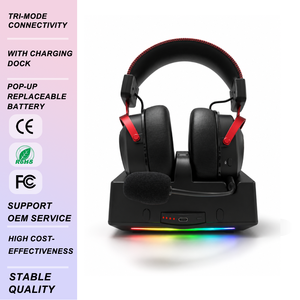
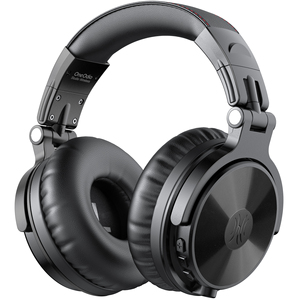
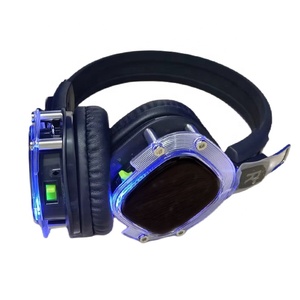
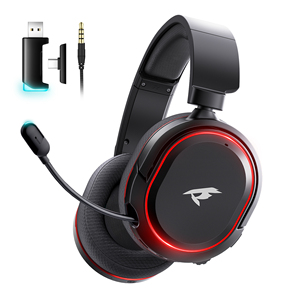
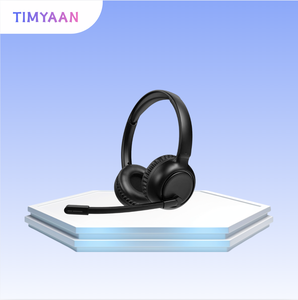

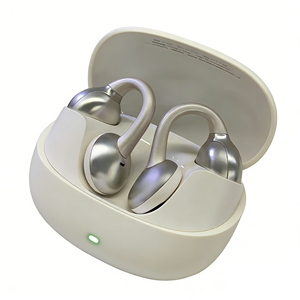
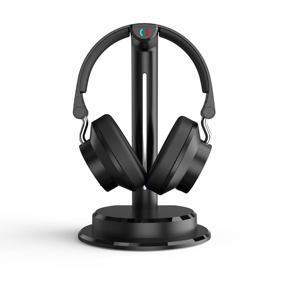
The global market for studio wireless headphones and professional monitoring headsets is undergoing a fundamental technological shift. Driven by developments in low-latency RF transport, loss-less Bluetooth codecs (LDAC, LHDC 5.0, LC3), active noise cancellation (ANC) algorithm refinement, and spatial audio rendering, commercial buyers and global distributors must carefully re-evaluate their OEM/ODM manufacturing partnerships. Sourcing studio headphones no longer centers merely on physical assembly; it demands advanced DSP tuning capability, high-yield SMT lines, acoustic cavity engineering, and strict compliance with international RF and battery safety standards.
This industry white paper serves as an authoritative guide for B2B procurement managers, brand managers, audio distributors, and enterprise buyers looking to partner with top-tier wireless headphone manufacturers. By breaking down technical evaluation frameworks, acoustic tuning paradigms, manufacturing workflows, and supply chain trends, this document empowers decision-makers to minimize lead times, avoid costly compliance pitfalls, and secure products that deliver genuine Information Gain to end users.
Key Procurement Insight: True studio-grade wireless monitoring requires a uncolored frequency response (20Hz–20kHz ±1.5dB), minimal Total Harmonic Distortion (THD < 0.1% at 1kHz 100dB SPL), dynamic range spanning past 110dB, and transmission latency under 20 milliseconds to replace traditional wired studio monitors successfully.
Selecting an OEM/ODM partner from among thousands of factories requires structured qualification criteria. Enterprise buyers must audit potential manufacturing vendors across six non-negotiable operational vectors:
Tier-1 factories maintain fully calibrated ISO 3745 compliant fully-anechoic chambers, SoundCheck/APx555 audio analyzers, and proprietary DSP algorithm development teams for spatial audio and ANC tuning.
Demonstrated mastery over dual-mode Bluetooth 5.4 plus 2.4GHz proprietary ultra-low latency dongle architectures, ensuring zero dropouts in radio-dense studio environments.
Implementation of automated optical inspection (AOI), 100% frequency curve matching against target Harman or flat reference curves, headband cycle stress testing, and IPX ratings verification.
When specifying OEM studio headphones, selecting the correct driver diaphragm material and transducer topology dictates performance limits, battery drain, and unit cost structure. The table below outlines the core driver technologies currently produced across top manufacturers:
| Transducer Architecture | Frequency Response | THD (1kHz, 94dB) | Power Consumption | Target Studio Application |
|---|---|---|---|---|
| 40mm/50mm Titanium Dynamic | 15Hz – 22kHz | < 0.3% | Low (20mA–35mA) | Commercial Mixing, DJ Monitoring, General Studio Work |
| Beryllium-Coated Composite | 10Hz – 40kHz (Hi-Res) | < 0.15% | Medium (30mA–45mA) | Mastering, High-Fidelity Broadcast, Reference Tracking |
| Ultra-Thin Planar Magnetic | 5Hz – 50kHz | < 0.05% | High (60mA–90mA) | Audiophile Reference, Critical Mastering & Spatial Mix |
| Hybrid Dynamic + Balanced Armature | 20Hz – 35kHz | < 0.2% | Medium (35mA–50mA) | Vocal Tracking, In-Ear Studio Monitors, Multi-Channel |
The manufacturing landscape for studio-grade wireless audio is undergoing aggressive innovation. Brand owners and buyers must prioritize manufacturers that actively integrate the following five core technological trends into their product roadmaps:
Modern studio workflows demand uncompressed transmission. Standard Bluetooth codecs introduce 80ms to 200ms latency, making live tracking, broadcast instruction, and video syncing impossible. Top factories now integrate hybrid chipsets (such as Qualcomm QCC series or Nordic Semiconductor nRF series) that support uncompressed 24-bit/96kHz transmission over a dedicated 2.4GHz USB-C wireless transmitter with ultra-low latency (<15ms), while simultaneously maintaining a Bluetooth 5.4 multipoint connection to mobile platforms.
Studio environments are moving beyond silent vocal booths into home studios, broadcast trucks, and busy control rooms. Modern studio wireless headphones employ hybrid dual-feedback ANC architectures using inward and outward-facing Knowles MEMS microphones. High-performance DSP chips calculate inverse phase sound waves within microseconds, reducing ambient HVAC and low-frequency electrical hum by up to 45dB without distorting the original acoustic reproduction curve.
With corporate buyers and global brands adhering to strict ESG (Environmental, Social, and Governance) guidelines, leading factories are moving away from glued assembly towards modular designs. Headphones engineered with quick-release ear cushions, replaceable Li-ion polymer batteries (offering up to 110 hours of continuous playback per charge), and detachable dual 3.5mm/6.35mm gold-plated jack cables reduce electronic waste while maximizing product lifespan for institutional clients.
Commercial clients expect white-labeled companion iOS and Android software. Advanced OEM manufacturers provide software development kits (SDKs) allowing brands to offer 10-band parametric EQ tuning, custom firmware over-the-air (OTA) updates, spatial audio soundstage expansion, and hearing-test-based acoustic compensation profiles tailored to individual audio engineers.
Procurement Red Flag: Avoid manufacturers who rely solely on generic software solutions without owning source code rights for their DSP chips. Firmware ownership ensures long-term security compliance, customized bug fixes, and seamless multi-platform operating system upgrades.
Drawing from a decade of excellence in connected lifestyle tech and precision wearable audio manufacturing, our production setup offers unparalleled OEM/ODM advantages for global enterprise partners, wholesale distributors, and retail brands.
We combine industrial-scale SMT output with artisanal acoustic engineering to provide market-ready studio headsets that command high retail margins.
Our flagship Master Series engineering team collaborates with internationally recognized acoustic engineers, mastering flat frequency response curves, spatial positioning, and high-bitrate LHDC/LDAC codec integration.
Guided by visionary industry leadership, we have grown into one of the top 3 global smartwatch and wireless audio powerhouses, serving over 5 million satisfied users across worldwide markets.
Every studio headphone unit undergoes rigorous 100% Anechoic Chamber frequency response matching, drop testing, sweat resistance verification, and headband tension cycling backed by an enterprise 1-Year Comprehensive Warranty.
We operate end-to-end compliant e-waste collection and recycling management programs, ensuring all plastics, batteries, and metallic drivers conform to RoHS, REACH, CE, and FCC environmental mandates.
For buyers interested in building a custom studio wireless headphone lineup, understanding the typical OEM/ODM production lifecycle is essential for timeline forecasting and budget planning:
Direct technical and operational answers to common inquiries from audio brand managers, wholesale buyers, and international sourcing teams.