
Pre-validated hardware architectures engineered for fast market rollout, custom branding, and custom firmware integration.
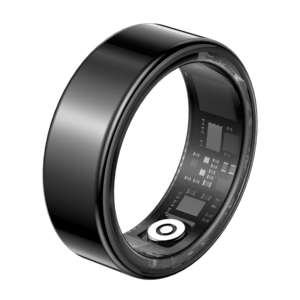
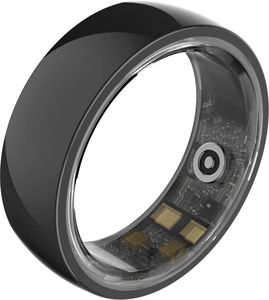
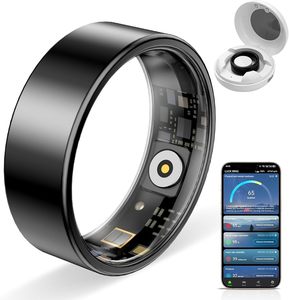
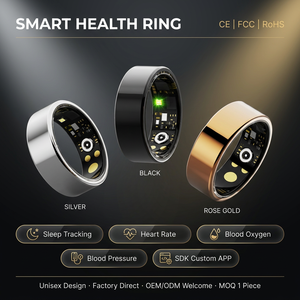
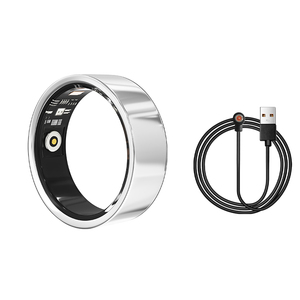
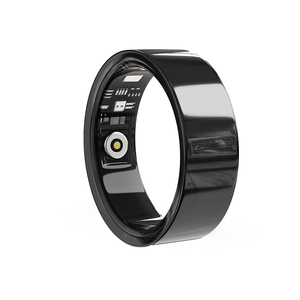
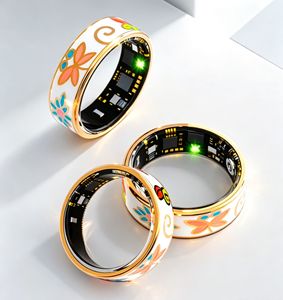
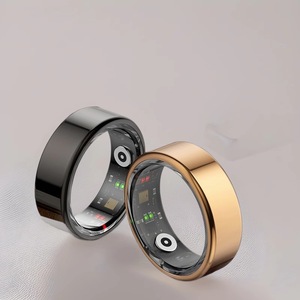
Backed by over a decade of technological evolution, our production infrastructure bridges the gap between consumer electronics and high-precision medical telemetry.
From micro-SMT surface mounting to custom iOS/Android companion app delivery, our unified engineering stack lowers development risks and speeds up market deployment.
Our ultra-dense 4-layer and 6-layer flexible PCB assembly (FPC) fits dual-wavelength PPG sensors, medical-grade accelerometers, and Bluetooth Low Energy (BLE 5.2/5.3) SoCs into a sleek, ring-shaped shell under 2.5mm thick.
Utilizing vacuum PVD coating, titanium alloy, and medical-grade epoxy resins, our smart ring housing ensures zero skin irritation (ISO 10993 compliant) and supports full 5ATM/IP68 deep-water immersion for swimming and sports monitoring.
Accelerate your software launch with complete BLE communication protocols, raw data sensor streams (PPG, ACC, Temperature), and ready-to-brand native iOS and Android SDKs compatible with Apple Health, Google Health Connect, and cloud platforms.
Custom-built micro curved lithium-polymer batteries paired with ultra-low power Nordic & Dialog processors achieve 5 to 7 days of continuous telemetry sampling per charge, supported by rapid magnetic charging docks.
Our manufacturing workflow operates under strict ISO 9001 and ISO 13485 standards. All hardware comes certified with CE, FCC, RoHS, and REACH compliance, backed by eco-friendly electronic waste recycling policies.
From custom laser engravings, shell color variations (Rose Gold, Matte Black, Polished Chrome, Space Gray), to bespoke retail packaging and automated OTA firmware customization, we provide true white-label fulfillment.
A comprehensive guide for hardware product managers, health tech procurement directors, and consumer electronic brand owners looking to enter the wearable space.
Over the past decade, the global wearable market has seen a major transition from wrist-based fitness trackers and smartwatches to ring-form health trackers. Wrist-worn devices often suffer from signal disruption caused by skin movement, wrist bone shadows, and inconsistent skin contact. Finger-based wearables, however, offer a distinct physiological advantage for optical biomonitoring.
The finger is densely packed with central digital arteries, placing capillary beds close to the skin's surface. This allows Photoplethysmography (PPG) sensors to capture clean optical pulse signals with higher signal-to-noise ratios (SNR). By capturing reflection signals directly from digital arteries, OEM smart rings achieve unprecedented accuracy for Heart Rate Variability (HRV), Blood Oxygen Saturation (SpO2), Continuous Resting Heart Rate (RHR), and Peripheral Micro-vascular Temperature tracking.
| Biometric Parameter | Sensor Mechanism | Optical Wavelength | Clinical Accuracy Target |
|---|---|---|---|
| Pulse & HRV | Green LED Photoplethysmography | 525 nm - 535 nm | ±1 BPM vs 3-Lead ECG |
| Blood Oxygen (SpO2) | Red & Infrared Dual Optics | 660 nm / 940 nm Reflection | ±1.5% in 70%-100% SpO2 Range |
| Skin & Core Temp Trend | NTC Micro-Thermometer Array | Direct Thermal Contact | ±0.05°C Sensitivity Resolution |
| Sleep & Activity Index | 3-Axis Micro Accelerometer | Ultra-low Power MEMS | 95% Automatic Epoch Detection |
Building a sleek smart ring under 3 grams requires balancing micro-electronics, power supply, optical path design, and material science. Unlike standard smartwatches with spacious internal layouts, a smart ring must fit a complete microcontroller, battery, charging coil, antenna, and sensor suite into a tiny, curved enclosure.
Key micro-engineering components managed in our production facilities include:
A. Flexible Rigid-Flex Circuitry (FPC): Standard rigid PCBs cannot fit into a circular ring shape. Our smart ring factories use high-density, multi-layer rigid-flex printed circuit boards. These circuits bend smoothly inside the ring mold while protecting surface-mount components (SMD) from mechanical stress during daily wear.
B. Curved Micro Li-Po Batteries & Charging Efficiency: Battery life remains a key differentiator for smart wearables. We utilize proprietary curved lithium-polymer batteries tailored to fit the ring's interior curve without sacrificing energy density. Paired with intelligent power-management ICs (PMIC) and low-leakage sleep states, our rings deliver 5–7 days of continuous monitoring with micro-magnetic docking chargers.
C. RF Antenna Tuning for Metallic Enclosures: Metallic outer shells—such as titanium alloy or stainless steel—can naturally block Bluetooth signals. Our antenna engineers use advanced 3D LDS (Laser Direct Structuring) and custom ground-plane geometry to route the Bluetooth Low Energy (BLE) signal through tiny non-conductive gaps. This ensures stable connections with smartphone apps up to 10 meters away, even when wrapped around a human finger.
As the smart ring industry matures, procurement teams must look beyond basic step counts and sleep monitoring. Brands competing in today's wearable space require differentiated features and scalable architecture. Key trends shaping procurement include:
1. On-Device Edge AI & Predictive Health Insights: The market is moving away from sending raw data to mobile apps for analysis. Future OEM smart rings integrate tiny edge-AI microcontrollers capable of running lightweight neural networks right on the device. This allows instant detection of irregular heart rhythms (such as AFib precursors), rapid sleep stage transitions, and early fever alerts—all processed locally with minimal battery drain.
2. Contactless NFC Payment & Smart Home Access: Beyond health tracking, smart rings are expanding into digital identity and security tools. Integrating secure-element NFC chips allows users to make contactless payments at retail terminals, unlock electronic doors, and authenticate enterprise network logins with a simple tap of their finger.
3. Medical-Grade Regulatory Alignment (FDA/CE MDR): Health platforms, insurance providers, and corporate wellness programs are seeking medical-grade hardware certifications. Leading OEM factories are upgrading their quality systems to meet ISO 13485 standards. This compliance paves the way for smart rings to obtain FDA 510(k) and European CE MDR clearance for continuous arrhythmia and continuous SpO2 monitoring.
4. Subscription-Based B2B SaaS Ecosystems: Hardware margins alone can be limiting. Successful consumer brands are adopting hybrid hardware-plus-subscription models. By utilizing our open API/SDK architecture, brand partners can quickly launch custom companion apps featuring premium, paywalled health reports, personalized AI coaching, and tele-health data sharing.
Choose the manufacturing path aligned with your brand's technical capacity, budget, and market entry timelines.
Ideal for: Established Tech Brands & Medical Companies
Ideal for: Scale-up Consumer Brands & E-commerce Leaders
Ideal for: Corporate Wellness, InsurTech & Tele-Health
Everything you need to know about minimum order quantities, custom tooling, firmware integration, and factory verification.
For ready-to-ship standard hardware models with custom laser branding and custom box packaging, our MOQ starts at 500 units. For fully custom ODM projects requiring unique casing molds, custom color PVD finishes, or proprietary PCB designs, the standard MOQ is typically 2,000 to 5,000 units depending on component sourcing requirements.
Every single smart ring produced in our factory undergoes two stages of automated testing: a dry vacuum pressure test followed by an automated 5ATM liquid pressure test. We use industrial medical-grade UV-cured structural adhesives and micro-injection sealing rings to maintain true IP68 and 5ATM waterproof ratings.
Yes. We provide complete Native iOS (Swift) and Android (Kotlin/Java) SDKs, along with technical documentation detailing BLE UUID services, data packet parsing, payload decryption, and command structures. We also offer cloud API webhooks for server-to-server data synchronization.
We source ultra-pure high-density cobalt lithium-polymer micro cells equipped with integrated Seiko protection boards. All battery cells undergo a 100% 72-hour aging test and capacity sorting cycle prior to assembly. This ensures rings retain over 80% of their original capacity even after 500 complete charge-discharge cycles.
Sample units for evaluation can be dispatched within 3 to 5 business days. Customized OEM private-label production runs generally require 15 to 25 days. Full ODM projects involving new physical molds and custom FPC layouts typically require 45 to 60 days for complete tool fabrication, engineering samples (EVT/DVT), and final mass production (MP).
Connect directly with our senior hardware engineers and OEM account specialists to request sample kits, SDK documentation, and factory direct volume pricing.
Contact Us