
China Wholesale Curved AMOLED Smartwatch Manufacturing: Strategic B2B Sourcing Guide
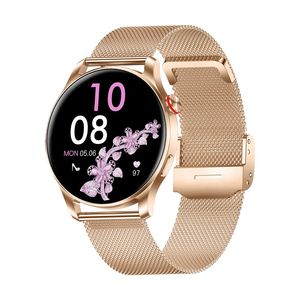
The global wearable device ecosystem is experiencing a structural paradigm shift. As consumer demand transitions from elementary fitness trackers toward fashion-forward, health-centric wristwear, buyers, importers, and OEM brand operators require sophisticated hardware platforms. Central to this evolution is the Curved AMOLED (Active-Matrix Organic Light-Emitting Diode) display technology. By merging ergonomic wrist curvature with self-lit pixel luminance, high-contrast ratio visuals, and energy-efficient driver microchips, China’s high-tech manufacturing sector has established itself as the undisputed epicentre for wholesale curved AMOLED smartwatches.
As a leading Chinese custom smartwatch manufacturer and exporter, our engineering facilities bridge the gap between industrial design, advanced bio-sensing algorithms, and high-yield cleanroom packaging. This comprehensive whitepaper provides B2B buyers with an operational roadmap covering screen architecture, chip integration, battery density engineering, supplier verification, and future procurement market trends for 2025 through 2030.
1. Technical Architecture of Curved AMOLED Wearable Displays
Unlike conventional flat Thin-Film Transistor (TFT) LCD panels or rigid glass screens, curved AMOLED displays utilize flexible polyimide (PI) substrates. This structural innovation allows the display module to conform to the natural anatomical curvature of the human wrist (typically designed around a optimal 2.5D or 3D 1500R-2000R radius curve).
1.1 Packaging Engineering: COF vs. COP Architecture
Achieving ultra-narrow screen bezels on curved smartwatches requires high-density chip packaging. Standard entry-level smartwatches use Chip-on-Glass (COG) methods, which mandate a wide bottom chin to house driver ICs. In contrast, our wholesale curved AMOLED manufacturing utilizes advanced Chip-on-Film (COF) and Chip-on-Plastic/Polyester (COP) packaging:
- COF Packaging: The display driver IC is mounted directly onto a flexible circuit tape that bends behind the display panel, cutting bottom bezel thickness from 4.5mm down to 1.8mm.
- COP Packaging: Designed for high-end flexible AMOLED panels, the polyimide substrate itself bends backward 180 degrees at the bottom edge, practically eliminating screen margins and delivering an impressive screen-to-body ratio exceeding 92%.
1.2 Optical Metrics & Visual Performance Benchmarks
Commercial smartwatch buyers must look beyond simple display size. To deliver an uncompromised user interface in direct sunlight, curved AMOLED panels manufactured in our China cleanrooms strictly maintain the following hardware benchmarks:
- Peak Luminance: 850 to 1,000 Nits, dynamically controlled via ambient light sensors (ALS) to preserve battery efficiency.
- Pixel Density & Resolution: 326 to 466 PPI (Pixels Per Inch), achieving Retina-grade clarity for fine typography and intricate clock face graphics.
- Contrast Ratio: 100,000:1 true black levels, enabling Always-On Display (AOD) features that consume less than 1.2% battery capacity per hour in passive mode.
- Protective Surface Lamination: Vacuum-bonded 3D curved Corning Gorilla Glass or sapphire crystal finished with vacuum-electroplated hydrophobic and oleophobic anti-fingerprint coatings (AF coating contact angle > 115°).
2. Display & Hardware Architectural Comparison Matrix
To assist enterprise buyers in structural product planning, the following table compares typical entry-level wearable hardware against our flagship Curved AMOLED Smartwatch platform:
| Technical Parameter | Legacy TFT LCD Smartwatch | Standard Flat AMOLED | Flagship Curved AMOLED (OEM Platform) |
|---|---|---|---|
| Display Substrate | Rigid Glass LCD | Flat Glass AMOLED | Flexible Polyimide (PI) Substrate |
| Curvature Radius (R) | 0 (Flat) | 2.5D Edge Chamfer | True 3D Ergonomic Curve (1500R) |
| Screen Packaging | COG (Wide Chin) | Standard COF | Ultra-Narrow COP / Folded Flex COF |
| Peak Brightness | 350-450 Nits | 600 Nits | 850 - 1,000 Nits (Sunlight Readable) |
| PPG Biosensor Integration | Single-Green LED | Dual-LED Heart Rate | 8-Channel Multi-Wavelength Optical Array |
| Processor Architecture | Single-Core MCU | Basic Dual-Core MCU | Dual-Engine Chipset (Cortex-M33 + GPU) |
| Ingress Protection | IP67 Dust/Splash | IP68 Waterproof | 5ATM / IP68 Hydrostatic Cleanroom Standard |
3. Core SoC, Microcontroller & Sensor Array Integration
A brilliant display must be paired with low-latency processing and accurate biometric telemetry. Our OEM/ODM smartwatch architecture relies on dual-engine system-on-chip (SoC) microprocessors that separate graphic rendering from sensor sampling background tasks.
3.1 Dual-Engine Processing Architecture
To deliver a smooth 60 FPS UI refresh rate on curved high-resolution displays without rapidly exhausting the battery, our motherboards feature advanced silicon architecture:
- High-Performance Application Core: ARM Cortex-M33 running at 192MHz to handle 2D GPU graphics acceleration, Bluetooth phone call audio processing, and vector graphic animations.
- Ultra-Low Power Coprocessor: RISC-V or Cortex-M0+ core running continuously at sub-20MHz to handle background step counting, photoplethysmography (PPG) optical sensor monitoring, and accelerometer polling in deep sleep mode (<15µA standby current).
3.2 Advanced Biometric Telemetry Sensors
Precision health tracking is a primary conversion driver in consumer wearable sales. Our manufacturing facilities integrate industry-certified biosensing clusters:
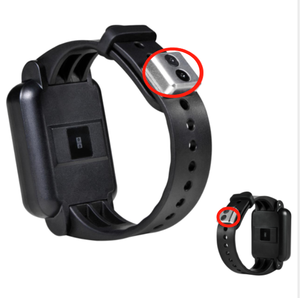
- 8-Channel Optical PPG Array: Incorporating dual green LEDs (525nm) for heart rate, infrared LEDs (940nm) and red LEDs (660nm) for pulse oximetry (SpO2) estimation, paired with low-noise optical photodiodes to maximize signal-to-noise ratio (SNR) across diverse skin tones.
- ECG & Bioimpedance (Optional ODM Module): Stainless steel or titanium bezel electrodes combined with high-precision analog front-end (AFE) chips for single-lead electrocardiogram readings and bioelectrical impedance analysis (BIA) body composition tracking.
- Dual-Frequency Multi-GNSS Positioning: Concurrent tracking of GPS (L1+L5), GLONASS, Galileo, and BeiDou navigation systems with custom curved antenna array integrated directly into the metal frame bezel, eliminating signal dead zones during outdoor activity tracking.
4. Future Procurement Trends in the Curved AMOLED Smartwatch Industry
For procurement directors, distributors, and retail brand owners, understanding technological adoption curves is critical to preventing inventory obsolescence. Over the 2025–2030 horizon, several key trends will redefine wholesale sourcing in China:
Trend 1: Convergence of Luxury Aesthetics & Health Tech
The boundary between luxury traditional chronometers and functional digital wearables is collapsing. B2B buyers are requesting jewelry-grade materials combined with curved AMOLED modules. Demand for 316L stainless steel cases, real ceramic rear covers, physical rotating crowns with haptic linear motors, and crystal-adorned bezels (such as our NoiseFit Diva Araya series) is growing at over 34% annually in Western markets.
Trend 2: Transition to Micro-LED and LTPO AMOLED Panels
While standard LTPS (Low-Temperature Poly-Silicon) AMOLED is currently the wholesale volume benchmark, high-end OEM projects are adopting LTPO (Low-Temperature Polycrystalline Oxide) backplanes. LTPO enables dynamic screen refresh rates ranging from 1Hz during static screen display up to 60Hz during active navigation, reducing overall screen power draw by up to 25%.
Trend 3: Edge-AI Micro-Algorithms & Offline Voice Processing
Cloud-dependent smartwatches suffer from latency and privacy concerns. Future-ready wholesale products integrate on-device neural processing micro-engines. Offline AI algorithms enable local speech recognition for media control, smart home triggers, and predictive heart arrhythmia warning alerts directly on the wrist, even when disconnected from a smartphone.
Trend 4: Unified Cross-Device Audio-Wearable Ecosystems
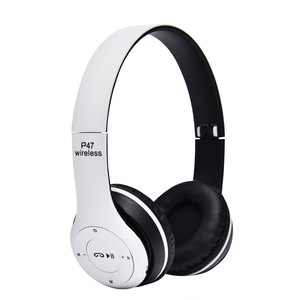
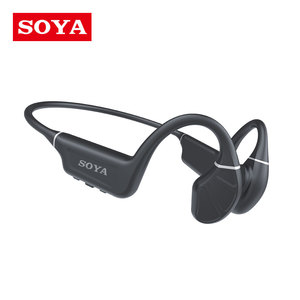
Importers are increasingly avoiding single-category orders. Brand owners prefer unified platform solutions where curved smartwatches and TWS open-ear headphones (OWS) or ANC headsets (such as our Master Series tuned with Sound by Bose) share unified companion smartphone applications, simplified OTA firmware updates, and synchronized marketing positioning.
5. Comprehensive B2B Sourcing Strategy & Manufacturing Workflow
Navigating direct-from-factory procurement in China requires strict quality control protocols, clear contractual milestones, and robust logistics alignment. Below is our standardized 6-stage manufacturing workflow for enterprise OEM/ODM orders:
Stage 1: Industrial Design & Rapid Prototyping (Weeks 1–2)
Following initial consultation and NDA signing, our design team produces 3D CAD models, structural thermal simulations, and 3D-printed resin mockups. Ergonomic radius testing ensures the curved chassis fits comfortably against diverse wrist sizes.
Stage 2: Custom Tooling & Mold Creation (Weeks 3–5)
High-precision CNC steel molds are milled for the watch housing, zinc-alloy or stainless-steel frames, and liquid silicone or TPU straps. Tolerance checks are performed down to ±0.02mm to maintain IP68 water sealing integrity.
Stage 3: SMT & Cleanroom Module Assembly (Weeks 6–7)
Printed Circuit Board Assemblies (PCBAs) pass through automated high-speed Surface Mount Technology (SMT) lines. Optical inspection systems (AOI) verify solder joint integrity. Display module lamination takes place inside Class 10,000 dust-free cleanrooms using optical clear adhesive (OCA) vacuum presses.
Stage 4: Automated Testing & Aging Burn-In (Week 8)
100% of assembled curved AMOLED smartwatches undergo 48-hour continuous screen burn-in tests, 5ATM hydrostatic pressure chamber immersion, drop impact resistance tests, and wireless RF signal calibration in anechoic chambers.
Stage 5: Firmware Flashing & Custom Packaging (Week 9)
Localized firmware languages, client-brand boot logos, customized watch faces, and companion app API configurations are uploaded. Products are packaged into customized retail boxes featuring localized compliance marks (CE, FCC, RoHS, WEEE).
Stage 6: Logistics, Freight Clearance & Warranty Support (Week 10+)
Palletized shipments undergo final AQL 0.65/1.0 random sampling inspection before export handling. All wholesale buyers receive a dedicated 1-Year Factory Replacement Warranty backed by localized technical documentation and spare component allocations.