
Whitepaper: Strategic Manufacturing & Global Procurement of Magnetic Neckband Headphones
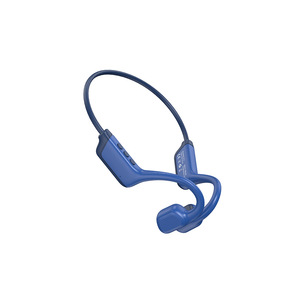
The global personal audio landscape is undergoing a massive architectural shift. As consumer demands expand beyond basic wireless connectivity toward multi-scenario versatility, long battery longevity, and low-latency acoustic precision, magnetic neckband Bluetooth headphones have re-emerged as a core driver in enterprise procurement, sports gear distribution, and consumer tech retail portfolios. For global brand owners, importers, and regional distributors sourcing from China—the world’s primary epicenter for electro-acoustic research and manufacturing—selecting a top-tier manufacturing partner requires a deep understanding of acoustic engineering standards, dynamic chipset architectures, and supply chain scalability.
This industry whitepaper serves as an authoritative guide for B2B buyers evaluating China magnetic neckband headphones manufacturers and suppliers. Designed to provide high Information Gain, this analysis explores technological benchmarks, acoustic hardware developments, rigorous quality assurance protocols, and future market demand signals necessary to construct a high-margin, low-RMA audio portfolio.
Executive Sourcing Insight: Modern magnetic neckband headphones are no longer categorized strictly as entry-level audio accessories. By integrating hybrid Active Noise Cancellation (ANC), multi-microphone Environmental Noise Cancellation (ENC), Hall-sensor magnetic switches, and ultra-dense lithium-polymer power cells, neckbands provide an unbeatable battery-to-weight ratio that TWS earbuds physically cannot match.
1. The Technological Evolution of Magnetic Neckband Headphones (2026–2030)
Over the past five years, personal audio micro-electronics have evolved significantly. While True Wireless Stereo (TWS) earbuds dominate fashion-centric consumer segments, magnetic neckband earphones retain a decisive advantage in active sports, industrial work settings, extended travel, and high-clarity voice communication environments. Understanding the underlying technological architecture enables procurement directors to specify exact component specifications during the OEM/ODM RFP process.
AI-Powered Dual-Mic ENC
Advanced neural network algorithms isolate human voice frequencies from ambient background noise up to 45dB, providing crystal-clear voice communication during outdoor cycling or high-noise industrial operations.
Hall-Effect Power Control
Integrated magnetic Hall switches automatically power off the headset when earbuds snap together and instantly re-pair upon separation, conserving power and extending standby battery lifespans to over 500 hours.
Ultra-Fast Battery Architectures
Utilizing high-density 3C fast-charging lithium cells and Type-C Power Delivery controller ICs, modern neckbands deliver 10 to 15 hours of continuous audio playback from a brief 10-minute charge cycle.
1.1 Advanced Electro-Acoustic Drivers & Codec Compatibility
The audio performance of modern neckbands relies heavily on driver diaphragm composition and system-on-chip (SoC) selection. Premium Chinese manufacturers utilize composite dynamic drivers ranging from 10mm to 14.2mm, incorporating Graphene, Titanium-plated PET, or PU+Biological Fiber membranes. These materials mitigate high-frequency distortion while extending bass response down to 20Hz.
Furthermore, leading OEM factories integrate advanced Bluetooth 5.3 and 5.4 platform chips (such as BES, Realtek, and Qualcomm series), enabling low-power high-resolution audio decoding via LDAC, LHDC, AAC, and SBC codecs. This ensures seamless cross-platform compatibility with Android, iOS, Windows, and industrial handheld terminals.
1.2 Ergonomic Neckband Silico-Gel Dynamics & Waterproofing Protocols
Physical durability is a fundamental metric for consumer satisfaction and brand loyalty. Leading China manufacturers employ liquid memory silicone over wrapped titanium-nickel shape-memory alloy wire cores. This combination allows 360-degree bending resilience without structural deformation, delivering skin-friendly, anti-allergic comfort for continuous wear.
For sports and outdoor procurement lines, physical ingress protection is implemented through nano-coating hydrophobic layers on internal Printed Circuit Board Assemblies (PCBAs) alongside precision sonic welding. This achieves IPX5 to IPX8 waterproof and sweatproof ratings, ensuring hardware longevity under extreme environmental stress.
2. Strategic B2B Procurement Guide: Decoding Manufacturer Specifications
When sourcing custom wireless neckband headphones from China factories, procurement managers must move beyond surface-level marketing spec sheets. Conducting deep technical alignment during initial sample testing ensures bulk production units meet strict target requirements.
| Technical Metric | Entry-Level Standard | Tier-1 OEM / Flagship Standard | B2B Procurement Impact |
|---|---|---|---|
| Bluetooth Version | v5.0 - v5.1 | v5.3 - v5.4 Dual-Mode | Reduces latency to <40ms; optimizes battery consumption by 30%. |
| Acoustic Driver | 10mm Single PET Diaphragm | 14.2mm Titanium / Graphene Composite | Delivers studio-tuned acoustics with dynamic spatial balance and deep bass. |
| Noise Cancellation | Single-Mic Software ENC | Hybrid ANC (35-45dB) + Dual-Mic AI ENC | Crucial for premium consumer tier positioning and noisy work environments. |
| Battery Capacity | 110mAh - 150mAh (~12h Playtime) | 400mAh - 1000mAh (60h - 100h Playtime) | Eliminates daily charging friction; key differentiator for outdoor/travel markets. |
| Ingress Protection | IPX4 (Splash Proof) | IPX7 / IPX8 + PCB Nano-Coating | Prevents sweat-induced RMA returns in fitness and sports retail channels. |
| Ergonomic Material | Standard PVC / Hard Rubber | Food-Grade Liquid Silicone + Memory Alloy | Ensures skin safety compliance (REACH/RoHS) and long-term user comfort. |
3. Enterprise Manufacturing Strengths & E-E-A-T Capabilities
Partnering with an established manufacturing supplier requires rigorous evaluation of their engineering infrastructure, quality control systems, and regulatory credentials. As a premier Chinese electro-acoustic manufacturer ranked among the top tier globally, our operational standards strictly align with international manufacturing guidelines.
ISO9001 & BSCI Certified Infrastructure
Our state-of-the-art production facility houses automated Surface Mount Technology (SMT) lines, cleanroom assembly bays, and automated optical inspection systems capable of producing over 500,000 wireless audio units monthly.
Sound by Professional Acoustic Tuning
Our in-house acoustic research department utilizes specialized Anechoic Test Chambers, SoundCheck electro-acoustic analyzers, and Head & Torso Simulators (HATS) to tune acoustic frequency curves precisely to client specifications.
End-to-End OEM & ODM Customization
From initial industrial design concepting, 3D CAD modeling, and rapid prototyping to custom tooling, PCB engineering, and firmware modification, we deliver turnkey manufacturing solutions tailored to global retail brands.
Rigorous Multi-Stage QA & Reliability Testing
Every production batch undergoes comprehensive environmental and mechanical stress testing, including 10,000-cycle button actuation, micro-drop tests, thermal shock chamber exposure (-20°C to 65°C), and salt spray corrosion testing.
Regulatory Compliance Assurance: All custom audio products engineered at our facilities carry complete regulatory certification suites—including CE, FCC, RoHS, REACH, Telec, and KC—ensuring seamless customs clearance and immediate compliance across European, North American, and Asia-Pacific markets.
4. Future Market Trends & Procurement Forecast (2026 and Beyond)
As global buyers refine their sourcing strategies for upcoming product cycles, several key macroeconomic and technological trends are shaping the future of magnetic neckband earphones:
4.1 Integration of Smart Voice Assistants & On-Device Edge AI
Next-generation neckbands are evolving into intelligent wearable audio terminals. Incorporating low-power Edge AI chips enables localized offline voice command processing, real-time language translation, and seamless integration with conversational AI tools. Procuring AI-ready hardware platforms now positions brands at the forefront of wearable consumer tech.
4.2 Health & Fitness Telemetry Convergence
With photoplethysmography (PPG) optical sensor miniaturization, neckbands are uniquely positioned to capture continuous biometric data—such as heart rate, heart rate variability (HRV), body temperature, and neck posture tracking. Because the neckband sits securely against the cervical spine, telemetry readings often exhibit lower motion-artifact interference than wrist-worn wearables during vigorous movement.
4.3 Sustainable Materials & E-Waste Circular Economy
Global regulatory bodies are imposing stricter corporate sustainability standards. Forward-thinking Chinese factories are replacing traditional petroleum-based polymers with post-consumer recycled (PCR) plastics, bio-based TPU silicones, and plastic-free unbleached packaging solutions. Partnering with a manufacturer offering verified e-waste collection and eco-compliant materials guarantees compliance with evolving international ESG mandates.
5. Comprehensive B2B Procurement FAQ
What is the typical Minimum Order Quantity (MOQ) for custom OEM magnetic neckband orders?
For standard custom colorways, custom logo silkscreening, and branded packaging, our baseline OEM MOQ starts at 1,000 units per model. For deep ODM projects involving custom plastic injection tooling, private PCB layouts, or custom chipset firmware development, the standard starting threshold is 3,000 units. Flexible tier volumes are available for long-term strategic retail distribution partners.
How do magnetic neckband headphones compare to TWS earbuds in terms of RMA return rates?
Historically, magnetic neckbands demonstrate a lower average RMA rate (<0.5%) compared to TWS earbuds (1.5%–3.0%). This is due to larger physical enclosures allowing robust battery protection circuits, unified single-battery charging paths (eliminating charging case pin-contact failures), and reduced risk of end-users misplacing individual earbud units.
What is the standard lead time from initial order placement to global shipment?
Sample evaluation and golden sample approval typically require 5 to 7 working days. Bulk mass production lead times run between 25 to 35 calendar days following artwork confirmation and initial deposit receipt, depending on component supply chain availability (specifically chipset and battery cell allocations).
Can your engineering team assist with custom sound profiles and app integration?
Yes. Our in-house acoustic and software engineers can program custom DSP EQ curves (e.g., Bass Boost, Vocal Enhancement, Balanced Studio) directly into the headset MCU. We also provide companion iOS/Android SDKs and APIs to integrate device telemetry, key mapping, and OTA firmware updates into your existing brand app ecosystem.
What warranties and quality guarantees are provided with factory shipments?
We provide a comprehensive 12-month quality guarantee on all manufactured audio gear. Furthermore, bulk shipments can include a 0.5% to 1.0% spare unit allocation or complete spare component kits (ear tips, silicone bands, battery assemblies) to streamline local customer service resolution in your target markets.
Accelerate Your Audio Lineup with China's Premier OEM Partner
Contact our B2B engineering and procurement team today to request product samples, factory audit reports, or custom quotation breakdowns for your market requirements.