

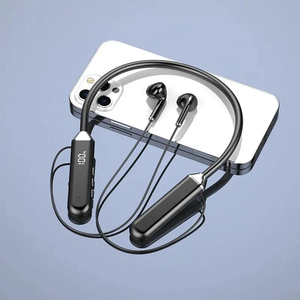

Engineering Excellence in Earhook & Sports Audio Supply Chains
An executive overview of acoustic architecture, ergonomic material science, IPX8 waterproofing, and strategic B2B sourcing trends for high-performance earhook sports earbuds exported from China.
The global sports audio market has experienced a fundamental paradigm shift. High-intensity athletes, outdoor enthusiasts, and everyday fitness consumers no longer accept the trade-offs of traditional in-ear true wireless stereo (TWS) designs. Issues such as ear-canal fatigue, acoustic displacement during motion, sweat-induced seal degradation, and dangerous environmental isolation have driven rapid market adoption toward Earhook Sports Earbuds and Open-Ear Wearable Stereo (OWS) technologies. As a tier-1 Chinese acoustic engineering firm and enterprise supplier, our facility stands at the forefront of this manufacturing evolution, leveraging over a decade of R&D expertise, strategic tuning partnerships (including sound design benchmarks inspired by Bose and industry leaders), and certified cleanroom manufacturing lines.
1. Ergonomic Material Science: The Modern Earhook Structural Paradigm
Traditional sports earphones relied on rigid PVC plastics that created painful pressure points around the pinna. Today’s market leaders utilize high-grade Titanium-Nickel (NiTi) Shape Memory Alloy wires encapsulated in hypoallergenic liquid silicone rubber (LSR). NiTi memory wires allow the earhook to deform elastically under extreme dynamic load—such as sprint interval training, trail running, or heavy gym lifting—and instantly spring back to match the anatomically unique contours of the user's ear.
Furthermore, our engineering teams focus heavily on weight distribution vectors. By balancing the micro-battery payload inside the rear hook housing against the driver cavity positioned at the ear canal entrance, we achieve a center of gravity that exerts virtually zero downward force on the tragus. This weight equilibrium eliminates ear-canal soreness even during 6+ hours of continuous athletic wear, establishing a major competitive edge for brand owners targeting marathons and endurance sports demographics.
2. Acoustic Engineering: Dynamic Drivers, Spatial Audio & Open-Ear Clarity
Architecting acoustics for earhook sports earbuds presents unique physical challenges. Unlike sealed in-ear monitors that rely on ear-tip pneumatic pressure to retain low-frequency bass response, open-ear and sports earhooks must project clean acoustic wave-fronts across an air gap without sound leakage to adjacent bystanders.
- Composite Polymer & Beryllium-Coated Diaphragms: To prevent harmonic distortion during high-volume playback in noisy outdoor environments, our acoustic laboratories deploy 14.2mm to 16.2mm ultra-large dynamic drivers featuring DLC (Diamond-Like Carbon) or Beryllium composite diaphragms. These materials deliver rigid piston motion, producing deep, punchy sub-bass (20Hz–250Hz) while keeping vocal mids crystal clear.
- Directional Sound Cavity & Anti-Phase Acoustic Leakage Cancelation: Our proprietary acoustic chamber design projects sound directly into the external auditory meatus using targeted sound channels. Simultaneously, secondary acoustic vents generate inverted soundwaves to cancel out lateral acoustic spill, guaranteeing privacy during corporate calls or gym workouts.
- High-Resolution Codec Integration: For audiophile sports gear, our PCBA designs incorporate advanced Bluetooth Audio System-on-Chips (SoCs) supporting 24-bit/96kHz transmission via LHDC 5.0 and LDAC codecs, alongside standard AAC/SBC fallbacks.
3. Extreme Durability: IPX7/IPX8 Waterproofing & Hydrophobic Nano-Coatings
Sweat is inherently destructive to electronic hardware due to its high salt concentration and acidity. Standard consumer electronics often fail within months when exposed to persistent perspiration. As a premier Chinese exporter, our manufacturing standard mandates dual-layer ingress protection:
First, structural sealing employs ultrasonic plastic welding combined with liquid silicone gaskets around all parting lines and microphone ports. Second, all assembled PCBA board surfaces undergo a specialized PVD Hydrophobic Plasma Nano-Coating process. This microscopic barrier repels moisture at a molecular level. Even if sweat breaches the outer shell through extreme physical impact, the internal circuitry continues operating flawlessly under IPX7 or IPX8 immersion testing parameters.