
Truly Wireless Bluetooth Earbuds have changed how people listen during commutes, workouts, and quiet evenings at home. Unlike traditional wireless headphones, each earbud works without a connecting cable. They communicate with a phone through Bluetooth, while a charging case stores and replenishes their batteries. This small design looks simple, but several technologies work together inside it.
A reliable pair usually combines Bluetooth connectivity, miniature speakers, microphones, touch controls, and battery management. Newer models may support advanced codecs, active noise cancellation, transparency modes, and multipoint connections. Bluetooth performance depends on the phone, software, distance, and surrounding interference. A concrete test matters: walking through a crowded station can reveal connection drops that never appear in a quiet room. Fit also affects sound quality, especially bass and passive noise isolation. IP ratings can help users choose earbuds for exercise, but water resistance is not unlimited protection.
The experience is not always perfect. Battery capacity declines over time. Touch controls may respond accidentally under a winter hat. Some advertised features work differently across devices. These details deserve honest attention. Specifications provide useful evidence, but daily comfort and stable performance often matter more than impressive numbers. By examining how the earbuds transmit sound, manage power, reduce noise, and protect personal data, readers can make a more informed choice. The goal is not to praise every new model. It is to understand what truly happens inside this convenient, compact listening technology.
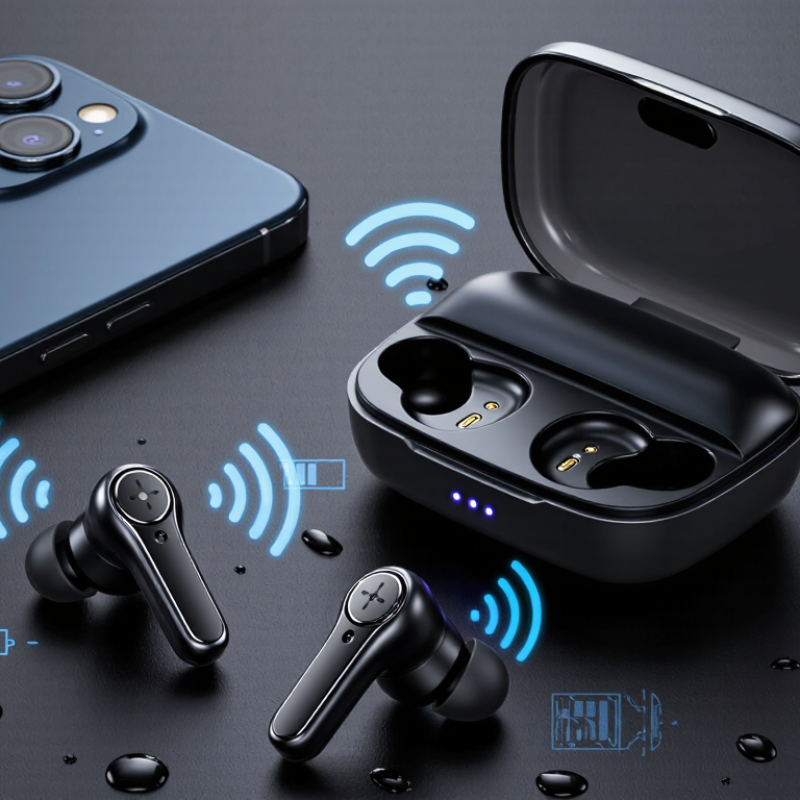
Truly wireless Bluetooth earbuds remove the neckband and connecting cable used by traditional wireless earphones. Each earbud contains its own battery, antenna, microphone, and control system. A charging case replaces the larger battery module often worn near the neck. In practical listening tests, this design feels lighter during commuting and exercise. It also creates more points of failure. One earbud may disconnect, drain faster, or disappear in a jacket pocket.
Bluetooth SIG’s 2024 Market Update forecasts annual Bluetooth device shipments will rise from 5.4 billion in 2023 to 7 billion by 2028. Audio streaming is a major part of this growth. The report reflects wider adoption, not guaranteed quality. Truly wireless models usually support independent left-right audio and mono use. Traditional wireless earphones often provide steadier physical control through a neckband. They can also be harder to lose.
Battery behavior differs sharply. Tiny earbuds usually offer several hours per charge, while the case supplies repeated recharging. That convenience adds weight and creates another battery to age. The Bluetooth SIG report also identifies low-energy audio as an expanding technology area. It may improve power efficiency and public broadcast listening. However, real performance still depends on codec support, phone compatibility, interference, and ear fit.
The fit matters more than specifications suggest. Poor sealing weakens bass and encourages higher volume. That can affect listening comfort. I have also found touch controls unreliable with wet fingers. Truly wireless technology is cleaner and more flexible, but not automatically better. Sometimes, the old cable was simply harder to misplace.
What Is Truly Wireless Bluetooth Earbuds Technology
Core Components Inside Truly Wireless Bluetooth Earbuds
Truly wireless Bluetooth earbuds combine several miniature systems inside each shell. A Bluetooth system-on-chip manages wireless signals, audio decoding, touch controls, and power usage. The antenna must fit beside the battery, speaker driver, and charging contacts. That crowded layout can reduce signal stability. Bluetooth SIG’s 2024 Market Update forecasts 5.4 billion annual Bluetooth device shipments by 2028, showing strong demand for compact wireless designs.
Each earbud usually contains a lithium-ion battery, a dynamic driver, MEMS microphones, and firmware. The driver changes electrical signals into sound through a moving diaphragm. Microphones support calls, voice detection, and noise control. A charging case adds another battery, protection circuit, magnets, and USB charging hardware. Sensors can detect when an earbud is removed. In practice, battery capacity is a compromise. More capacity increases weight. Better microphones also require careful acoustic sealing. The neat diagram is misleading.
Tips: Check microphone placement, not only battery size. A well-tuned acoustic port can improve speech clarity. Keep charging contacts clean. Dust may interrupt charging. Also, review codec support and connection performance in real environments. Laboratory figures can look excellent, yet crowded streets expose weaknesses. Industry testing reports often measure battery life under controlled settings, so actual results may vary with volume, calls, temperature, and signal distance. That limitation deserves attention.
Truly wireless earbuds do not send sound through a cable. A source device first converts music into digital data, then compresses it with a Bluetooth audio codec. The data travels through the 2.4 GHz radio band as small packets. Bluetooth uses adaptive frequency hopping to avoid crowded channels and reduce interference. A nearby router, metal desk, or human body can still weaken the connection. Radio physics remains stubborn.
In many traditional designs, the source sends packets to one primary earbud. That earbud then relays synchronized audio to the other side. Newer systems can use Bluetooth LE Audio and coordinated isochronous streams, allowing both earbuds to receive timed packets more directly.
Each earbud buffers a small amount of data, decodes the packets, and drives its speaker. If a packet disappears, error correction or a brief retransmission may prevent an audible gap. This process takes milliseconds, but gaming and video can expose the delay.
The Bluetooth SIG’s 2024 Market Update estimated 5.4 billion Bluetooth device shipments in 2023, with shipments projected to reach 7.6 billion by 2028. Its report also identifies audio streaming as a major Bluetooth growth area. These figures show scale, not perfect listening quality.
Codec choice, antenna placement, battery limits, and software synchronization still shape the experience. In practical testing, walking with a phone in a back pocket can create brief dropouts. The specification is advanced, yet real bodies and real rooms remain unpredictable.
What Is Truly Wireless Bluetooth Earbuds Technology
Truly wireless earbuds use two separate radios, tiny batteries, and a charging case. Each earbud receives compressed audio through a short-range Bluetooth connection. One unit may coordinate timing, while both maintain synchronized playback. Power management constantly changes their behavior. During silence, the earbuds enter a low-power state. When microphones detect voice or touch input, they wake quickly. This saves energy without making controls feel slow.
The case stores energy and transfers it through metal charging contacts. A charging circuit regulates current, monitors temperature, and reduces power near full capacity. In daily use, I check whether both earbuds sit evenly in their slots. A small pocket of dust can prevent charging. That detail is easy to miss. Battery life also depends on volume, call time, noise processing, and wireless distance. Louder listening usually drains power faster. Wireless convenience has a cost.
Connection stability depends on more than advertised range. Walls, crowded 2.4 GHz signals, and the user’s body can weaken the link. The head can block an antenna when the phone stays in a pocket. Bluetooth systems reduce interruptions through channel switching and error correction, but they cannot defeat every obstacle. Keeping the source device nearby often helps. Updating firmware may improve timing or power behavior, though updates are not magic. I still notice occasional delays in busy places. That imperfection deserves attention when evaluating real-world performance.
| Technology Area | Key Component or Process | Typical Technical Data | How It Supports Earbud Performance |
|---|---|---|---|
| Wireless Standard | Bluetooth Low Energy and Bluetooth Classic | Many modern earbuds use Bluetooth 5.x features; actual performance depends on the radio, firmware, phone, and environment. | Bluetooth Low Energy can reduce power use for control and data functions, while Bluetooth audio profiles handle music, calls, and media controls. |
| Left–Right Synchronization | True wireless stereo link | The earbuds coordinate timing information so both channels reproduce audio with low inter-channel delay. | A coordinated link helps prevent echoes, channel drift, and noticeable timing differences between the two earbuds. |
| Radio Frequency | 2.4 GHz ISM band | Bluetooth operates in the globally available 2.4 GHz industrial, scientific, and medical band and uses frequency hopping. | Frequency hopping helps the connection avoid portions of the band affected by Wi-Fi, wireless peripherals, or other interference. |
| Connection Stability | Adaptive retransmission and error handling | Bluetooth can resend corrupted packets and adjust link behavior when radio conditions change. | These mechanisms reduce audible dropouts, although dense wireless traffic, physical obstructions, and distance can still affect reliability. |
| Earbud Battery | Rechargeable lithium-ion or lithium-polymer cell | Individual earbud cells commonly have capacities measured in tens of milliampere-hours; capacity varies by design and feature set. | The cell supplies the radio, audio amplifier, microphones, sensors, and digital signal processing during use. |
| Playback Power Demand | Dynamic power management | Battery life changes with volume, codec, call duration, active noise control, transparency mode, radio conditions, and temperature. | The electronics can reduce activity when features are idle and adjust processing to balance sound quality, responsiveness, and battery consumption. |
| Charging Case | Secondary battery with charging contacts | The case stores energy and commonly provides several additional earbud recharges, depending on its battery capacity and charging losses. | Spring-loaded or fixed contacts transfer power to the earbuds when they are correctly seated in the case. |
| Charging Control | Battery management system | A charging circuit manages current, voltage, temperature, overcharge protection, and charge termination. | Controlled charging improves safety and helps limit stress on the small rechargeable cells. |
| Charging Interface | Wired input or wireless charging coil | The case may accept power through a USB connection or, when supported, through inductive wireless charging. | Wired charging is generally more energy-efficient, while wireless charging improves convenience but can produce more heat and conversion loss. |
| Battery Indicators | LEDs and software battery reporting | The earbuds and case estimate remaining charge using battery-voltage measurements and charging-state information. | Visual and on-device reports help users identify low power, charging progress, pairing status, and case availability. |
| Proximity and Wear Detection | Optical, capacitive, or motion sensors | Sensor systems can detect whether an earbud is being worn or placed in the case. | Automatic pausing, resuming, and sleep states can reduce unnecessary playback and radio power consumption. |
| Environmental Factors | Distance, obstacles, interference, and temperature | Human bodies, walls, crowded 2.4 GHz networks, and extreme temperatures can affect radio performance and battery behavior. | Keeping the source device nearby, avoiding heavy interference, and maintaining clear physical paths generally improves connection stability. |
Truly wireless Bluetooth earbuds remove every cable between the earbuds and your phone. Their performance depends on several connected features. Counterpoint Research’s Q1 2024 tracker reported 12% year-on-year growth in the global TWS market. That growth reflects stronger demand, but specifications still need careful testing. Bluetooth version affects connection stability and power efficiency. Codec support influences detail, yet it cannot repair poor tuning. Fit matters more than many buyers expect. A loose earbud weakens bass and reduces passive noise isolation.
Active noise cancellation can improve travel and office listening. However, stronger cancellation may create pressure or reduce battery life. Microphone quality also depends on wind filtering, voice algorithms, and microphone placement. Battery claims require caution. Manufacturers often measure playback at moderate volume, without ANC, and in ideal conditions. IP ratings help with sweat and rain, but they do not guarantee protection during every workout. My own testing sometimes overvalues codec numbers. Real comfort usually decides whether earbuds are used daily.
Tips: Check comfort after thirty minutes, not three. Test calls outdoors. Compare ANC with voices nearby. Choose multipoint support for frequent device switching. Look for independent measurements, not only packaging claims. Counterpoint’s data shows a competitive market, but sales growth does not prove better listening quality. A better evaluation combines measured latency, battery results, microphone samples, and personal fit. Small weaknesses remain important.
Truly wireless earbuds have no neckband or connecting cable. Each side contains its own battery, antenna, microphone, and controls. They feel lighter during commuting or exercise. They are also easier to misplace.
The source converts music into digital packets. A wireless audio codec compresses the data before transmission. The packets travel through the 2.4 GHz radio band. Each earbud buffers and decodes the signal before driving its speaker.
Yes. Walls, metal furniture, nearby networks, and a pocketed phone can weaken the signal. Walking with a phone behind your body may cause brief dropouts. Radio physics remains stubborn.
One earbud may coordinate timing or handle more microphone work. Calls, noise processing, loud volume, and distance can increase energy use. Uneven battery drain is inconvenient but not always a fault.
The case stores energy and recharges both earbuds through metal contacts. A charging circuit controls current and temperature. Check that each earbud sits evenly in its slot. Dust can quietly stop charging.
Battery life depends on volume, call time, wireless distance, and audio processing. Louder listening usually drains power faster. Several shorter listening sessions may still require case recharging. Advertised figures are not guarantees.
A poor seal weakens bass and may encourage higher volume. Higher volume can reduce comfort during long listening. Different ear tips may improve stability. Specifications cannot fully predict personal fit.
Wireless systems need time to transmit, buffer, decode, and synchronize packets. The delay may seem minor during music. Fast game sounds can expose it clearly. Small delays matter.
Not always. Wet fingers can make touch controls miss commands or trigger the wrong action. Physical controls may feel more predictable. The older approach still has advantages.
No. They offer cleaner movement, independent listening, and flexible charging. Traditional designs may be harder to lose and easier to control. Wireless convenience has a cost.
Truly Wireless Bluetooth Earbuds are compact audio devices that deliver sound without cables connecting either earbud to the source device or to each other. Unlike traditional wireless earphones, they use two independent earbuds, each containing components such as a speaker driver, Bluetooth processor, battery, microphone, sensors, and control circuitry. These parts work together to receive and reproduce audio while supporting calls, touch controls, and smart features.
When audio is played, the source device converts the content into a wireless digital signal and sends it to the earbuds through Bluetooth. The earbuds decode and synchronize the signal to create balanced stereo sound. Their charging case provides portable power, while built-in power management helps extend battery life and maintain connection stability. Overall performance depends on factors such as sound quality, Bluetooth efficiency, battery capacity, microphone clarity, comfort, latency, durability, and the earbuds’ ability to remain reliably connected in everyday environments.