Choosing a reliable supplier for a Men's Sports Smartwatch takes more than comparing product photos and unit prices. Buyers need to understand what the watch can actually do, how consistently it is made, and whether the supplier can support orders after delivery. A bright screen and bold casing may look convincing online. They do not prove that heart-rate readings, battery life, or water-resistance claims match everyday use.
China has a broad manufacturing base for wearable electronics, including factories, trading companies, and specialized product developers. Their capabilities vary. Some offer custom watch faces, app integration, packaging, or private-label production; others focus on ready-made models with lower minimum order quantities. Ask for clear specifications, sample units, test documentation, and written details about warranty and quality checks. Then compare the answers, not just the catalog.
Small details matter. Check the fit of the strap, the button response, and the clarity of the display under sunlight. Test synchronization with the intended phone models, too. Even a promising sample may not represent every production batch, so discuss inspection and defect handling before placing a large order. Supplier claims should be verified independently where possible; marketing language is not evidence. That can take time. It is also easy to miss something. This guide explores how to assess China’s Men's Sports Smartwatch suppliers, identify useful questions, and weigh product performance against cost, customization, and dependable communication. No supplier is right for every buyer, and the best choice often depends on the market and the level of support required.
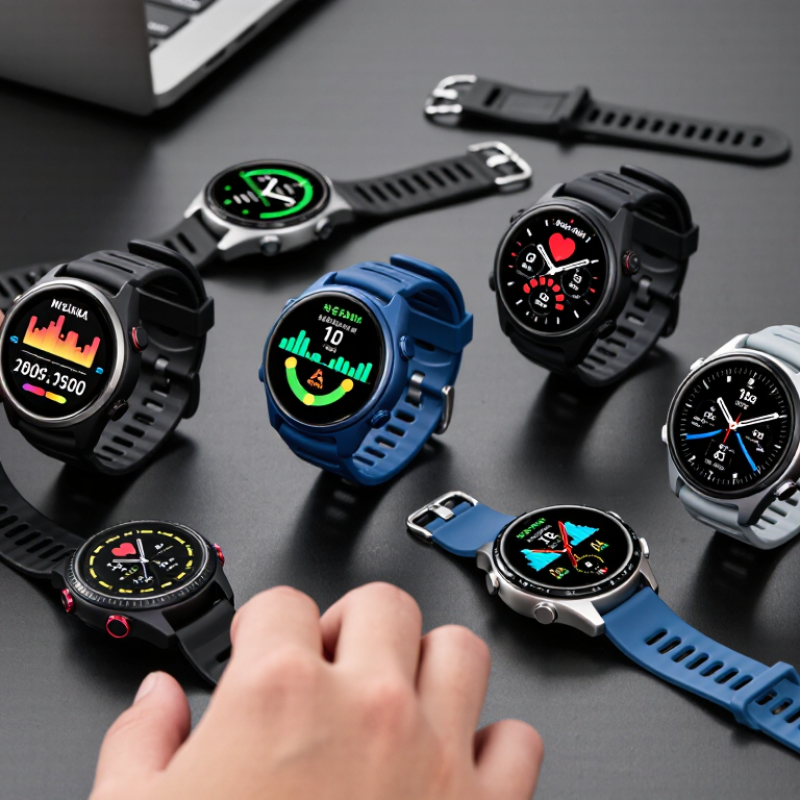
What Defines a Reliable China-Based Men’s Sports Smartwatch Supplier?
A reliable China-based men’s sports smartwatch supplier can explain how its products are tested, not just list features. Ask for sample units and check heart-rate readings during a steady walk, screen visibility outdoors, and button use with damp hands. Small details matter. A bright display is less useful if the strap slips during a run.
Look for clear specifications, consistent sample quality, and practical support after delivery. The supplier should describe battery capacity, charging time, water-resistance test conditions, and sensor limitations in plain language. Ask how production batches are checked and what happens when a unit fails inspection. Vague answers deserve a follow-up. Reliable partners can usually provide records or explain their process, though no test result guarantees identical performance in every situation.
Communication is part of product quality. A dependable supplier confirms requirements in writing, flags changes early, and gives realistic production timelines. Request a sample before approving a larger order, then compare its packaging, finish, and functions with the agreed specifications. I would not judge a supplier by a polished catalog alone; catalogs make everything look easy. Sometimes the sample reveals a loose crown or a confusing menu. That is useful evidence, not a reason to ignore the issue. Look for a supplier willing to investigate it and document the fix.
Key Features of Men’s Sports Smartwatches for Different Activities
Best China Men’s Sports Smartwatch Suppliers?
Key Features of Men’s Sports Smartwatches for Different Activities
A useful sports smartwatch should match the activity, not simply offer the longest feature list. The American College of Sports Medicine’s 2024 Worldwide Fitness Trends survey ranked wearable technology as the leading fitness trend. That makes reliable tracking worth checking, but a sensor reading is not a medical diagnosis. For running, look for dependable GPS, readable pace data, and physical buttons that work with sweaty hands. For cycling, a larger screen and clear heart-rate zones help during quick glances. Small details matter.
Swimming calls for water-resistance specifications suited to pool use, plus lap and stroke tracking. For strength training, comfortable wear and easy-to-read timers may matter more than advanced route maps. Battery life also deserves attention: frequent GPS use can drain a watch faster than everyday activity tracking. Check the stated battery estimate under the modes you actually plan to use.
These are not always tested under identical conditions, which makes comparisons imperfect. I would also examine strap comfort and menu simplicity; a feature that is hard to find mid-workout is not very useful. In supplier discussions, request clear test methods and sample-device checks rather than relying only on a specification sheet.
How to Evaluate Chinese Smartwatch Manufacturers and Suppliers
Best China Men's Sports Smartwatch Suppliers?
How to Evaluate Chinese Smartwatch Manufacturers and Suppliers
Choosing a Chinese smartwatch supplier takes more than comparing prices and product photos. Grand View Research estimated the global smartwatch market at USD 33.58 billion in 2023, projecting an 8.9% compound annual growth rate from 2024 to 2030. That forecast signals opportunity, not guaranteed demand for any individual model. Ask suppliers for factory addresses, production capacity, quality-control procedures, and recent audit records. Check whether their claimed experience covers sports watches specifically, rather than consumer electronics in general. Details matter.
Request sample units and test them during real workouts. Compare heart-rate readings against a trusted reference, check GPS tracks on familiar routes, and inspect screen visibility in direct sunlight. Test buttons with sweaty hands. Review battery life with GPS enabled, not just the supplier’s ideal-use estimate. Small differences can matter. They can also be hard to reproduce.
Assess the supplier’s ability to document materials, waterproof testing, software updates, and defect handling. IDC reported 538.9 million wearable-device shipments worldwide in 2024, up 6.1% year over year, in its Worldwide Quarterly Wearable Device Tracker. This broader category includes devices beyond smartwatches, so it should not be treated as a smartwatch sales figure. Ask for the underlying test method, not just a certificate image. I would also compare production samples with units from a later batch; that step is easy to skip, and sometimes the results are disappointing.
How to Evaluate Chinese Men’s Sports Smartwatch Suppliers
Suggested evaluation weights for comparing suppliers. These are practical scorecard recommendations, not market-survey results. Verify each supplier’s claims with test reports, samples, and written service terms.
OEM, ODM, Certification, and Customization Options
When evaluating China-based men’s sports smartwatch suppliers, compare engineering depth, not just sample appearance. IDC reported 534.6 million wearable-device shipments worldwide in 2024, up 6.1% year over year, in its Worldwide Quarterly Wearable Device Tracker. That scale makes dependable production and quality control essential. Ask for OEM services using your design, or ODM support with an existing platform adapted to your needs. Check how suppliers manage GPS accuracy, heart-rate sensor placement, battery life, and water-resistance testing. Request test records, not promises.
Get specific about customization. Can the supplier adjust the case size, strap material, screen layout, firmware, packaging, and language settings? A useful sample should include the intended strap and software; otherwise, daily comfort and interface quality remain hard to judge. Small details matter. For example, a textured strap can feel secure during training but irritate skin after a long session. Discuss minimum order quantities, tooling fees, sample lead times, and firmware-update support before signing off.
Review the factory’s quality-management documentation, such as an ISO 9001 certificate, and verify its scope and validity with the issuing body. For target markets, ask which conformity assessments and test reports apply to the finished device, battery, and charger. Requirements differ by destination. A certificate alone does not prove every customized version is covered. I would also request a pilot run and inspect units from different production batches; one polished sample can hide inconsistencies. That check takes time, but skipping it is a poor shortcut.
Pricing, Quality Control, and Global Supply Considerations
Choosing a China-based men’s sports smartwatch supplier means comparing landed cost, not just unit price. Ask for itemized quotes covering display, GNSS, heart-rate sensors, battery, tooling, packaging, and firmware support. Request prices at several order volumes, such as 500, 2,000, and 10,000 units, and written approval rules for component substitutions. Small details matter. A cheaper quote may lose its advantage through rework, spare parts, or delayed replenishment.
Market figures need context. IDC’s Worldwide Quarterly Wearable Device Tracker reported that global wearable-device shipments rose 6.1% to 534.6 million units in 2024. Counterpoint Research, however, reported a 7% drop in global smartwatch shipments that year. These figures cover different product categories, so they are not directly comparable. For buyers, the practical lesson is to verify a supplier’s production capacity against the specific watch category and confirmed orders, rather than broad market growth.
Quality control should start with an approved “golden sample,” then cover incoming components, assembly, and final testing. Check GPS tracking, heart-rate readings, battery performance, button response, and water-resistance claims against documented test procedures. ISO 2859-1 sampling plans can help define inspection acceptance levels, but sampling cannot replace process audits. Request traceable production-lot records and test reports for your destination markets. One point is easy to miss: freight buffers and replacement-unit planning affect real costs. I would still allow extra time; supplier schedules can be optimistic.
FAQS
Request a sample and test it during a real workout. Check screen visibility outdoors and button use with damp hands. A polished catalog proves little.
Compare heart-rate readings with a trusted reference and GPS tracks on a familiar route. Test battery life with GPS enabled. Estimates can disappoint.
Ask about capacity, batch inspections, and how failed units are handled. Request records or a clear explanation of the process. Vague answers need follow-up.
Compare the approved sample with units from a later production batch. Inspect the finish, packaging, and functions. This check is easy to skip.
Ask for the test conditions and records, not just a general claim. Results may not reflect every use situation. Details matter.
Ask about case size, strap material, screen layout, firmware, packaging, and language settings. Test the intended strap and software together. Comfort can change over a long session.
OEM support can use your design, while ODM support adapts an existing platform. Ask what engineering changes are possible and how updates are supported. Get specifics.
Confirm specifications, sample approval, timelines, inspection steps, and defect handling in writing. A pilot run can reveal batch differences. I would not skip it.
Conclusion
Choosing the right China-based supplier for a Men's Sports Smartwatch involves more than comparing prices. Reliable partners should demonstrate consistent product quality, responsive communication, clear production capabilities, and experience supporting international customers. Buyers can assess manufacturers by reviewing sample units, testing product performance, examining quality-control procedures, and confirming production capacity and delivery timelines.
The best smartwatch features depend on intended activities, from everyday fitness tracking to outdoor training. Before placing an order, discuss OEM and ODM services, available customization, and relevant product certifications. Compare quotations carefully, taking account of materials, features, packaging, inspection standards, shipping, and after-sales support. A thorough evaluation helps businesses balance cost, functionality, and dependable supply while selecting a product suited to their customers’ needs.