
Open-Ear Wireless Earbuds let you listen without sealing your ear canals. Many use small air-conduction speakers that sit just outside each ear and direct sound toward it. Bone-conduction models work differently: contact points rest near the cheekbones and transmit vibrations. The distinction matters. Both designs leave the ears uncovered, but they deliver audio in different ways.
Like other wireless earbuds, most connect to a phone or computer over Bluetooth. Inside each earpiece, a driver turns the audio signal into sound; built-in batteries and controls support playback, calls, and volume adjustments. The open design can make it easier to hear nearby voices, a doorbell, or traffic while listening. It does not guarantee awareness, though. Loud playback can still mask important sounds, and audio may be audible to people sitting close by. Small details matter here.
Fit also affects comfort and sound. A loose earpiece may shift during a walk, while glasses or ear shape can change how well it sits. Open designs often provide less bass and isolation than sealed earbuds, though performance varies by model. That trade-off is easy to overlook. If you are comparing options, check how the speaker rests, whether controls are simple to use, and how the maker describes battery life and water resistance. These earbuds are not automatically better for every listener or setting. They are a different approach, with practical benefits and limits worth weighing before you buy.
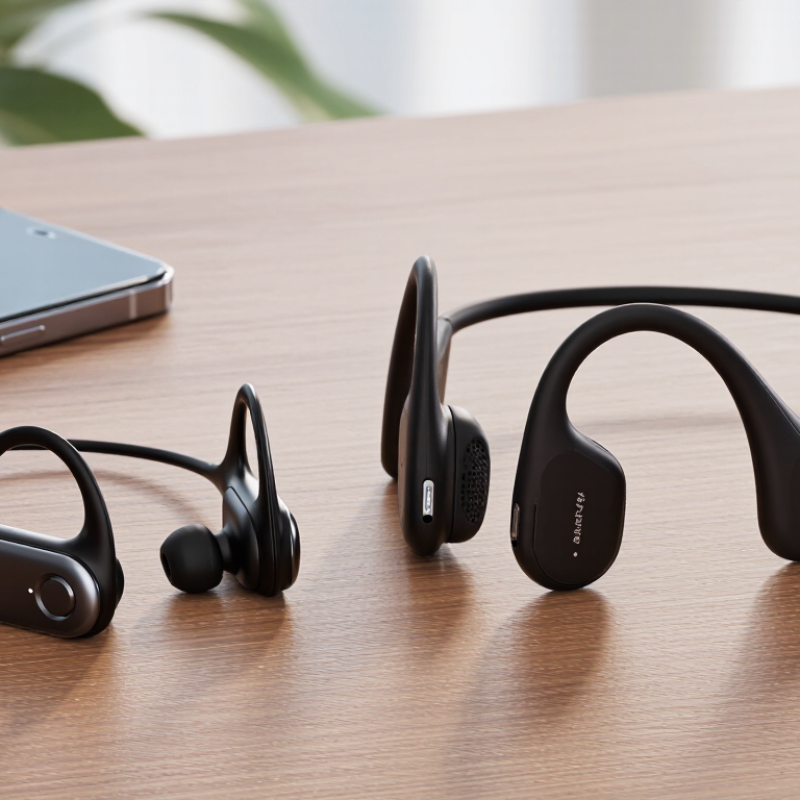
Open-ear wireless earbuds are wireless listening devices designed to leave the ear canal uncovered. Most use small speakers positioned just outside the ear, directing sound toward it through the air. They connect to a phone or computer, usually over Bluetooth. Unlike sealed earbuds, they do not form a snug plug inside the ear. That distinction matters.
Some designs rest on the outer ear, while others use a flexible hook or clip to stay in place. Bone-conduction models work differently: they send vibrations through the bones near the ear, rather than relying only on sound traveling through the air. The exact fit and sound quality vary by design. In practice, an uncovered ear can make nearby conversation or traffic easier to notice, such as during a walk. It does not guarantee awareness, though; loud playback can still distract you. Sound may also leak in a quiet room, and bass can feel less full than with sealed earbuds. A small trade-off. Fit can be fiddly, too, especially with glasses or hats. Open-ear earbuds suit people who want to listen while remaining more connected to the sounds around them, but they are not ideal for every setting.
They leave the ear canal uncovered. Small speakers sit near the outer ear and send sound through the air.
They usually receive audio from a phone or computer over Bluetooth. A processor and amplifier drive the small speakers.
They use a transducer against the skin near the cheekbone. It sends vibrations through bone toward the inner ear. Different placement, different feel.
Often, yes. Nearby conversation, traffic, or a doorbell may remain audible. But loud playback can still distract you.
They can. People nearby may hear your audio, especially in a quiet room or at higher volumes. A little awkward.
Bass may feel less full because sound is not contained around the ear. Wind and street noise can also make audio seem faint.
Some people find them less pressing because there is no sealed tip. Fit still varies with head shape, movement, glasses, and hats.
A noisy train can drown out a podcast. Quiet rooms may also be difficult when call privacy matters. It depends on the setting.
Place each speaker securely near the ear and keep volume moderate. Shifting it a few millimeters can change clarity. Easy to overlook.
Open-Ear Wireless Earbuds are audio devices designed to let sound reach the listener without sealing off the ear canal. Unlike traditional in-ear designs, they sit near or around the ears, leaving them more open to surrounding sounds. They reproduce audio through small speakers that direct sound toward the ears, while wireless connections carry audio from a phone or other compatible device.
Their lightweight shapes and hooks, clips, or curved supports help keep them in place during everyday activities. This open design can feel more comfortable for extended listening and makes it easier to remain aware of nearby conversations or sounds. However, audio may be less immersive than with sealed earbuds, and people nearby may hear some sound leakage. Background noise can also make listening less clear, so these earbuds may not suit every environment or listening preference.